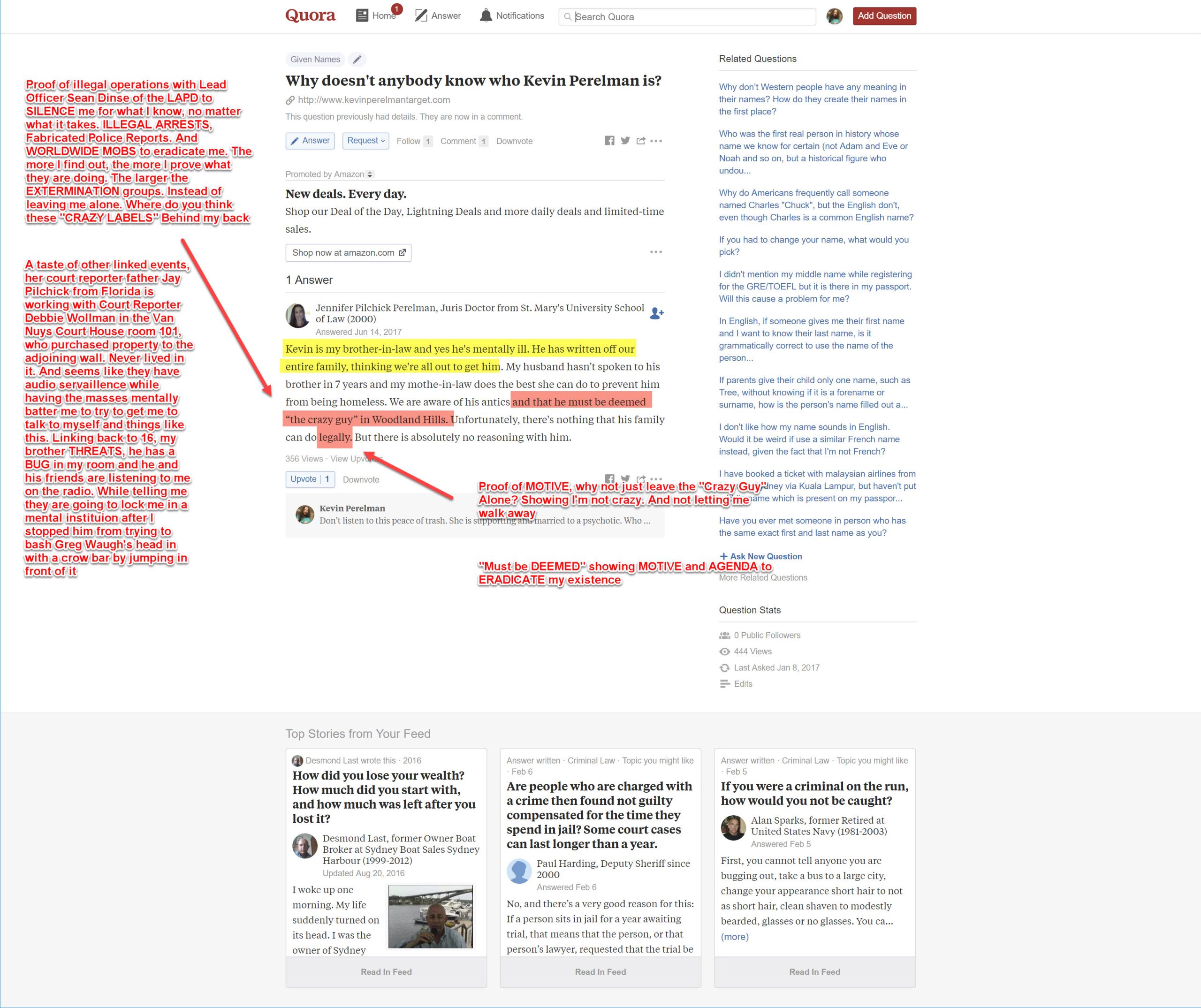
Posts Tagged ‘Mental Health Records’

Seymour Amster, Illegal Judicial Operations, Complete Conduct Linkage and Motive Dossier

Posted: October 4, 2026 in Uncategorized
Tags: , , , , , , , , , , , , , , , , , , , , , , , , , , , , , , , , , , , , , , , , , , , , , , , , , , , , , , , , , , , , , , , , , , , , , , , , , , , , , , , , , ,

A comprehensive record of the 2017 representation appeal Dinse relationship and connected pattern

https://rumble.com/v42o3ek-9202019-david-kestenbaum-flat-out-states-seymour-amster-likes-to-put-people.html

Executive Assessment

The available record supports a serious, focused criticism of Seymour I. Amster’s representation. The concern is not simply that he lost a difficult misdemeanor trial or selected an imperfect strategy. The concern is that the direction of his choices repeatedly favored a psychiatric-dangerousness explanation over an innocence, self-defense, false-reporting, provocation, or police-influence defense. He recognized several components of the defense—protected expression, vigilante conduct, witness provocation, and the danger of using criminal law to suppress unpopular speech—but did not assemble the objective records capable of proving those components. He then used language that invited jurors to understand Kevin Perelman as mentally ill, paranoid, and potentially violent, including references to guns, Parkland, and Columbine.

That choice had consequences extending beyond the verdict. The trial court imposed mental-health treatment and force-and-violence conditions. Amster then handled the appeal from his own trial, repeated the psychiatric premise, reproduced damaging prosecution-centered facts, failed to develop a section 1118.1 sufficiency issue, and did not present the extra-record ineffective-assistance claim that would have required examination of his own files and decisions. The Court of Appeal expressly treated the sufficiency issue as forfeited because the opening brief did not develop it and the reply appeared to disavow it.

The relationship to Officer Charles “Sean” Dinse is evidentiary rather than personal on the current record. Dinse testified to an extensive police-centered information stream: more than fifty social-media interactions, approximately fifteen field contacts, and thirty to forty telephone calls, including calls from Burbank and Thousand Oaks asking whether Perelman “was a problem.” Amster did not expose the identities, dates, sources, repetition, independence, or police feedback underlying that apparent mass corroboration. Later public material concerning Dinse’s official neighborhood-watch communications, online groups, location sharing, psychiatric descriptions, and the Schellenberg litigation shows why that testimony demanded investigation. It does not by itself prove that Amster and Dinse made a private agreement.

The strongest supportable conclusion is therefore narrower than a proved conspiracy but more serious than ordinary negligence: Amster knew the defense theory, knew that police and civilian actors used psychiatric and dangerousness language, knew the State relied on numerous ostensibly independent complaints, and knew there was evidence of provocation and vigilante behavior. Yet he did not build the factual defense, affirmatively introduced an extreme psychiatric-danger narrative, and then occupied the appellate position from which his own trial conduct should have been challenged. That consistent direction supports an inference of purposeful adverse representation or abandonment sufficient to justify a detailed investigation. Intentional loss remains an allegation requiring direct or circumstantial proof, not an established fact.

Identity Professional Capacity and Expected Competence

Seymour I. Amster is an active California lawyer, State Bar No. 105308, admitted in December 1982. Public professional descriptions identify criminal defense, appellate practice, and federal and state trial and appellate work as principal areas of practice. A current nonprofit-board biography describes more than forty-three years of experience and claims certification as a criminal-law specialist since 1998. His reported background includes Loyola University of Los Angeles and Loyola Law School. These facts matter because the disputed choices cannot readily be attributed to an inexperienced lawyer unfamiliar with criminal trials, appeals, confrontation, preservation, or the difference between a lay label and a clinical diagnosis.

Amster’s reported appellate work includes published or publicly available federal and California matters involving confrontation, cross-examination, ineffective assistance, sentencing, and constitutional claims. In Murdoch v. Castro, he litigated a Sixth Amendment confrontation issue through repeated Ninth Circuit proceedings. Other public cases show that he knew how to challenge prosecution evidence, develop alternative-suspect theories, attack DNA or scientific proof, and allege prosecutorial misconduct. His work in the Grim Sleeper prosecution demonstrates that he could pursue extensive alternate-source and evidentiary arguments in a high-stakes case. This background does not prove misconduct in Perelman’s case, but it weakens an explanation that the central omissions resulted merely from ignorance of basic defense practice.

The profile should not distort that professional history. Public decisions also show ordinary losses and criticism of missed administrative duties in unrelated litigation. They do not establish a general pattern of intentional sabotage. The relevance is competence and capacity: the record presents a lawyer experienced enough to recognize the importance of source evidence, impeachment, preservation, confrontation, and appellate issue development.

The Representation in Context

The 2017 prosecution combined separate incidents and cases into a broad course-of-conduct narrative. The amended case ultimately submitted six counts to the jury, including public-nuisance, criminal-threat, battery, and handbill allegations. The prosecution was permitted to present a continuous history involving cards, photographs, websites, neighborhood encounters, community complaints, and police contacts. That structure created a predictable danger: separate accusers and anonymous callers could appear to corroborate one another even if they shared information, received a common warning, responded to the same online circulation, or repeated a police-supplied description.

A competent defense did not have to prove every event across Perelman’s life or ask jurors to accept a worldwide theory. It needed to isolate representative modules and prove them. The available modules included the Bailey Bernard 911 call and residence-gate sequence; Dinse’s community-contact testimony, parking citation, and alleged residence recording; representative Scroggins recordings and statements; the HOA relationship; the origin and location of the disputed photograph; and records showing that Perelman sought police assistance. Properly organized, those items could have tested initiation, claimed fear, motive, report reversal, police influence, independence, and self-defense without overwhelming the jury.

What Amster Correctly Recognized

A fair profile must acknowledge that Amster did not simply endorse the prosecution. Portions of the trial record show that he recognized several important defense principles.

· He argued that the public-nuisance prosecution implicated protected speech and that public-nuisance law should not become a device for suppressing expression merely because distribution annoyed residents.

· He stated that the Scroggins and Bernard encounters were initiated by others who approached or provoked Perelman and would not disengage.

· He identified vigilante conduct and criticized people who take law enforcement into their own hands instead of using lawful channels.

· He argued that the prosecution displayed the photograph of Perelman with a gun to portray him as dangerous.

· He attacked the prosecutor’s personal characterization of Scroggins as an unusually “brutally honest” witness and preserved a vouching objection.

· He sought special First Amendment instructions and argued that the jury had to distinguish expressive distribution from littering or nuisance conduct.

These points are significant for two reasons. First, they show that counsel understood the core defense theory. Second, they make the omissions harder to explain as an innocent failure to recognize relevance. Counsel rhetorically identified provocation, vigilantism, protected expression, and danger framing, but did not present the strongest objective evidence needed to turn those themes into reasonable doubt.

The Psychiatric Dangerousness Narrative Introduced by Defense Counsel

The closing argument

The most consequential conduct appears at approximately reporter’s transcript pages 999 through 1005. Amster began his closing not with innocence, factual contradictions, self-defense, or missing police evidence, but with a claimed societal mental-health crisis. He discussed the closure of state hospitals, described mentally ill people as previously being “locked up,” referred to “their paranoia,” and said they were now “among us.” He asked whether society should use criminal statutes to find a way to lock them up.

“I don’t think it’s any surprise to you if I make a statement to you that we have a mental health crisis in our society.” — Defense closing, RT approximately 999

“They were locked up. They had their paranoia they were able to deal with on their own. And they were nice away from us.” — Defense closing, RT approximately 999

“Now we have them in our society. We don’t have them locked up in hospitals. They are among us.” — Defense closing, RT approximately 999

Amster then moved from institutionalization to prospective violence. He asked what would happen if Perelman’s passive distribution were stopped, whether “the mentally ill” would move to extremes, and whether they might “pick up a gun and get violent.” After the prosecutor objected and the court warned the jury not to consider punishment, Amster continued the same theme. He invoked “the mothers in Parkland” and “the mothers at Columbine,” asking jurors to consider whether future violence could have been prevented by allowing the allegedly passive conduct.

“Do they eventually, as you close down their avenues, pick up a gun and get violent?” — Defense closing, RT approximately 1002

“I want each of you to think about the mothers in Parkland and the mothers at Columbine.” — Defense closing, RT approximately 1003

This was not a neutral plea for tolerance. It associated counsel’s own client with paranoia, institutional confinement, firearms, school massacres, and future lethal violence. It supplied a propensity and dangerousness narrative more inflammatory than the charged misdemeanors. It also treated mental illness as established without the present record identifying a competent diagnosis supporting that characterization.

Why the argument was internally contradictory

Amster’s stated rhetorical purpose appears to have been that criminalization could make a troubled person more dangerous and that society should tolerate passive expression. But the means of making that argument undermined the client. A defense attorney can argue that unconventional expression is protected without declaring the client mentally ill. Counsel could have said that the State may not convert unpopular speech into criminal propensity, that the incidents had to be judged from objective evidence, and that witnesses who approached or provoked the defendant could not erase their own conduct. Instead, he asked jurors to acquit partly because restriction might cause the client to become violent.

That is especially damaging in a case involving a criminal-threat count and a photograph used to imply dangerousness. The prosecution needed jurors to fear Perelman and to interpret ambiguous words as serious threats. The defense reinforced the emotional premise by supplying its own prediction of possible gun violence. Even if intended as social commentary, it exposed the client to precisely the inference counsel had accused the prosecution of seeking.

Client authorization and factual foundation

The existing record does not establish that Perelman consented to a mental-illness defense, agreed that he had paranoia, authorized comparisons to mass shootings, or received advice concerning the risks. Nor does it identify a qualified expert who diagnosed him and supported this strategy. A treatment history, attendance letter, family assertion, police opinion, or counsel’s belief is not a clinical diagnosis. The counsel file should reveal the factual foundation, strategy memoranda, consultations, proposed expert evidence, client objections, and reasons counsel believed these references advanced acquittal rather than dangerousness.

Failure to Build the Objective Defense

Bailey Bernard and the battery count

Count 7 concerned an alleged battery involving Bailey Bernard. Perelman’s account was that Bernard followed him from a park to his residence, physically crowded him, obstructed his entry, interfered with his camera, and struck the hand holding his keys. Perelman states that he called 911 and went to a police station. Those assertions were capable of objective testing through the 911 recording, CAD and dispatch records, gate or property video, police-station surveillance, photographs, injury evidence, the first report, report drafts, and witness statements.

The trial presentation acknowledged only generally that Bernard followed Perelman. It did not reconstruct the pursuit to his home and the gate encounter through the original records. That omission mattered to self-defense, initial aggressor, claimed fear, report reversal, and credibility. The section 1118.1 acquittal motion did not develop the battery count, and the prosecution’s appellate brief later noted that no acquittal motion was made as to Counts 2 and 7.

Scroggins and the criminal-threat count

Scroggins was not merely a passive recipient of a spontaneous statement. The record and proffered material identified an HOA role, repeated contacts, property or vehicle approaches, windshield letters, continued proximity, claimed financial or property-value concerns, acknowledged PTSD and anger-management history, and recordings that allegedly included “That’s the man I want to kill.” Those materials were relevant to bias, motive, claimed fear, who initiated encounters, and whether the disputed statement was interpreted accurately.

The precise wording was also disputed. The State used the formulation, “If you do this one more time, I will slice you open.” Perelman’s testimony used materially different conditional language: “If you don’t let me take a walk, I will cut you down,” followed by an explanation that he meant leave him alone and did not want to hurt anyone. Counsel needed to compare the exact words, context, conditional phrasing, conduct afterward, speaker perceptions, and evidence of actual sustained fear. Instead, the most inflammatory wording dominated the verdict and later appellate narrative.

Amster did object when the prosecutor called Scroggins one of the most or more “brutally honest” witnesses she had encountered. But that narrow vouching challenge did not substitute for factual impeachment. The reviewing court treated any impropriety as harmless after the objection and instruction. Objective recordings, HOA evidence, threats, approaches, and inconsistent statements would have attacked the witness’s credibility directly rather than merely attacking the prosecutor’s phrasing.

The evidence archive

Perelman states that counsel received or was offered an evidence archive of approximately seventy terabytes. Volume alone is not a defense, and counsel was not required to play or file everything. It did require a review protocol: inventory the media, preserve proof of delivery, identify representative incidents, authenticate selected clips, create transcripts or stills, interview custodians, and map each item to a charged count or impeachment purpose. No complete inventory, review log, selection memorandum, or admissibility plan is presently identified.

The absence of organization became self-reinforcing. Because counsel did not convert the archive into a limited evidentiary presentation, Perelman’s broader account could appear unsupported or symptomatic. Counsel then used that appearance to support a psychiatric framing. The lawyer’s failure to organize corroboration effectively became evidence against the client.

Officer Charles Sean Dinse and the Untested Information Network

Dinse’s trial testimony

Dinse’s own testimony made the police-community network a case-specific issue. He described receiving complaints about Perelman’s cards in multiple locations through “several different sources and methods.” He testified to being flagged down in the field, receiving calls on city cellular and desk telephones, and using social media. When asked to quantify contacts, he estimated more than fifty social-media interactions, approximately fifteen field approaches, and thirty to forty telephone calls. Some callers came from Burbank and Thousand Oaks and asked whether Perelman “was a problem.”

That testimony allowed the prosecution to present numerical repetition as apparent independent corroboration. But the jury was not shown whether the contacts came from fifty different people or repeated activity by a smaller group; whether callers saw conduct firsthand; whether they received a common photograph, label, business card, warning, or police post; whether Dinse communicated information back to community members; or whether contacts preceded the charged events. The identities, dates, content, geographic origin, and resulting police action were foundational facts, not peripheral curiosity.

What Amster did not establish

· Who contacted Dinse, how often, and about what specific conduct.

· Whether contacts were independent or coordinated through the same neighborhood groups or social-media posts.

· Whether Dinse supplied descriptions, labels, photographs, location information, or advice before later witnesses encountered Perelman.

· Whether the calls generated CAD entries, reports, field contacts, citations, or enforcement activity.

· Whether callers from distant cities had personally met Perelman or were responding to circulated information.

· Whether Dinse’s own notes, direct messages, account exports, telephone logs, and group-administrator records contradicted or qualified his summary testimony.

· Whether a limiting instruction was required to prevent jurors from treating anonymous contacts as substantive proof of character, conduct, or mental state.

Recurring Dinse contacts and impeachment

Perelman identifies Dinse in the 2013 sidewalk contact, the 2017 prosecution, a parking citation bearing Dinse’s name approximately two weeks before expected defense testimony, a residence-area recording in which an officer allegedly suggested checking whether a door was unlocked, and a later accusation that Perelman followed Dinse home. Recurrence alone does not prove wrongdoing. Combined with Dinse’s own testimony about extensive community communications, however, it made assignments, reports, messages, citation metadata, complaint history, social-media activity, and bias obvious subjects for investigation.

The parking citation and residence recording provided concrete tests. The citation could have been compared with the trial schedule, Dinse’s assignment, location, vehicle position, photographs, metadata, and preceding communications. The residence recording could have been authenticated and compared with dispatch, CAD, body-camera, access, and authorization records. Amster allegedly possessed or was directed to this evidence but did not organize it into an admissible foundation or confront Dinse with it.

Later public evidence explaining the missed inquiry

A public 2014 introduction attributed to Dinse described the Senior Lead Officer role as monitoring crime trends, quality-of-life concerns, and neighborhood watch, and stated that community members used Facebook and other communications to alert one another. Public posts attributed to his officer account later showed residents being asked to identify, locate, or report people and activities. Independent reporting identified the private Valley groups “Crimebusters of West Hills and Woodland Hills” and “Homeless Transient Encampments of our West Valley,” in which officers and residents exchanged photographs, locations, descriptions, accusations, and requests for action.

The Los Angeles Times reported that LAPD ordered officers to stop participating after violent and harassing comments appeared in the groups. The reporting identified Dinse as an active officer participant and quoted his explanation that he used the pages to absorb street information and assist residents. This evidence does not show that he endorsed every member’s words, but it confirms that a police-connected neighborhood information channel was neither imaginary nor inherently impossible.

Rex Schellenberg’s 2020 federal complaint separately named Dinse and the City under 42 U.S.C. section 1983. The complaint alleged that Dinse circulated Schellenberg’s location, referred to him as a recurring subject, used an unverified “drug addiction/mental illness” explanation, and relied on community reporting as a pretext for contacts, towing, or property action. These were allegations, not adjudicated findings. Their significance is comparative: another identified person alleged a similar police-to-community process beginning during the same general period. The separate 2018 Schellenberg property-seizure case named the City rather than Dinse and must not be conflated with the 2020 Dinse case.

How Amster’s Choices Functionally Supported Dinse

No presently reviewed record proves that Amster privately coordinated with Dinse. “Supporting Dinse” is therefore best understood first as a functional result. Amster’s choices protected the evidentiary value of Dinse’s narrative and prevented meaningful testing of its source.

1. He allowed anonymous volume to operate as corroboration. Dinse’s counts of calls and contacts remained largely unexamined, permitting repetition to look like independence.

2. He failed to trace the information stream. Without names, dates, posts, messages, CAD records, and telephone logs, the defense could not determine whether police information preceded civilian accusations.

3. He failed to use recurring-contact impeachment. The citation, residence recording, 2013 history, and other reported Dinse contacts were not assembled into a chronology.

4. He substituted psychiatric explanation for source analysis. Instead of showing how labels and complaints circulated, counsel told jurors that his client was mentally ill and paranoid.

5. He reinforced dangerousness. His gun, Parkland, and Columbine references supported the preventive logic that an unconventional person should be controlled because of what he might do.

6. He preserved only a narrow appellate record. The missing investigation and exhibits made later review depend on the same incomplete trial record.

The functional result was that Dinse appeared as a reliable collector of independent community concern rather than a potential source, amplifier, or coordinator of the narrative. The jury could treat numerous contacts as proof that many unrelated people independently reached the same conclusion, while the defense failed to test whether they shared a common channel.

The Preventive Control or Pre Crime Theme

“Pre-crime” is not used here as a formal legal doctrine. It describes a preventive-control logic: restrain, monitor, label, exclude, treat, or confine a person because officials or community members predict future danger from speech, unconventional behavior, reputation, or psychiatric characterization rather than proving a completed offense through reliable evidence.

Amster’s closing embraced the vocabulary of that logic even while nominally criticizing criminalization. He asked what society should do with “the mentally ill,” discussed whether they should be locked up, and warned that limiting passive conduct might lead to guns and mass violence. This framed Perelman as a future-risk problem. The question subtly shifted from whether the State proved the charged conduct to how society should manage a supposedly mentally ill person who might become dangerous.

Dinse’s publicly reported methods raise a parallel concern. Community members supplied photographs, locations, warnings, psychiatric descriptions, and predictions of risk; police used those streams to decide whom to watch, approach, move, cite, tow, or refer. The Schellenberg allegations similarly challenged location sharing and psychiatric labeling as a basis for repeated intervention. Amster’s failure to investigate those channels allowed the preventive narrative to enter trial as an apparently neutral accumulation of concern.

The “political agenda” supported by the record is therefore not necessarily a partisan affiliation or campaign platform. It is an institutional preference for community surveillance, risk sorting, psychiatric characterization, exclusion, and preventive control. The current record can show that Amster’s argument and omissions advanced that framework. It cannot yet prove that he joined a political organization, received instructions from Dinse, or intentionally participated in a coordinated policy. Those stronger claims require communications, counsel-file evidence, testimony, or other direct proof.

The Appeal and the Conflict of Reviewing His Own Work

Same attorney trial and appeal

Amster represented Perelman on the appeal from the same trial. That dual role did not automatically disqualify him, but it created an obvious practical conflict. Meaningful appellate review required asking whether trial counsel failed to investigate, subpoena, authenticate, object, seek limiting instructions, move for acquittal, preserve claims, consult on strategy, or avoid prejudicial concessions. Amster could not present those arguments without evaluating and potentially accusing himself.

The record should establish whether Perelman knowingly waived that conflict, whether independent counsel reviewed potential ineffective-assistance claims, and whether Amster explained that extra-record claims required habeas development. No adequate waiver or independent review is presently identified.

Prosecution centered statement of facts

The opening appellate brief reproduced substantial portions of the State’s narrative: witnesses allegedly saw Perelman throw or drop large numbers of cards; Scroggins received the inflammatory threat; and the website described a worldwide conspiracy. It did not reconstruct the Bernard pursuit and gate encounter with original 911 and residence evidence, develop the Scroggins recording and alleged death statement, expose possible common sources underlying Dinse’s community contacts, or explain the defensive documentation purpose through authenticated representative proof.

The problem was not that an appellate brief must omit adverse facts. Counsel must state the record accurately. The problem was selection and balance: damaging allegations were repeated as the organizing narrative while the facts necessary to show provocation, nonindependence, self-defense, police influence, and report reversal remained undeveloped or outside the record because trial counsel had failed to build them.

The forfeited section 1118.1 issue

The Court of Appeal expressly stated that the opening brief did not develop why the evidence was insufficient under section 1118.1. The reply brief appeared to disavow the claim by characterizing the thrust as instructional error. The court therefore found the sufficiency argument forfeited and alternatively found substantial evidence. This was not merely an unfavorable legal ruling; it was an identified briefing failure by the same lawyer who had made the trial motion.

Narrow vouching claim and psychiatric sentencing premise

The appeal pursued the prosecutor’s “brutally honest” characterization of Scroggins, but the reviewing court found reversal unwarranted. The appeal thus attacked the prosecutor’s phrase while leaving the strongest factual impeachment outside a developed record. It also argued that the sentence punished “the mentally ill” rather than treating the psychiatric premise itself as unsupported. The reply brief stated that the community did not know how to interact with “one who is mentally ill” and asked whether incarceration would merely prolong mental illness. That framing carried the trial concession into the appeal.

The sentencing challenge raised the federal Eighth Amendment but did not develop the separate California constitutional “cruel or unusual” analysis noted by the appellate court. The court also treated aspects of the sentencing claim as forfeited for lack of a trial objection. These outcomes illustrate the cumulative problem: incomplete trial preservation, the same attorney on appeal, a psychiatric premise repeated as fact, and claims narrowed or forfeited.

Evidence Supporting an Inference Beyond Ordinary Negligence

Intentional loss cannot be declared solely because a lawyer made damaging choices. Lawyers sometimes adopt unsuccessful, inconsistent, or poorly executed strategies. The inference becomes stronger, however, when choices repeatedly run in the same adverse direction despite counsel’s demonstrated knowledge and available alternatives.

· Amster knew that provocation and non-disengagement mattered, because he said the central encounters were initiated by others.

· He knew vigilante conduct mattered, because he criticized witnesses taking law into their own hands.

· He knew the State was using dangerousness, because he accused the prosecution of using a gun photograph to make Perelman appear dangerous.

· He knew protected expression mattered, because he litigated First Amendment instructions and argued against nuisance-based suppression.

· He knew Dinse relied on an extensive community information stream, because Dinse quantified it before the jury.

· He had the training and experience to understand confrontation, source testing, impeachment, sufficiency, preservation, and appellate briefing.

· Despite that knowledge, he did not present the strongest objective proof and affirmatively associated the client with paranoia, institutionalization, firearms, Parkland, and Columbine.

· He then handled the appeal, continued the mental-illness premise, reproduced damaging facts, and failed to develop a claim the appellate court found forfeited.

This pattern permits a responsible inference of purposeful adverse representation, abandonment, or a strategy aligned with institutional control rather than acquittal. It does not establish which explanation is correct. The missing proof lies principally in the counsel file, communications, billing and review records, investigator decisions, client consultation, and Amster’s sworn explanation.

Competing Interpretations and Their Evidentiary Tests

Interpretation one misguided humanitarian strategy

Amster may claim that he sought to humanize Perelman, defend tolerance, prevent criminalization of mental illness, and argue that passive expression was socially preferable to confrontation. The test is whether he had a factual basis for the diagnosis, discussed the strategy with the client, obtained informed consent, considered its prejudice, and documented why mass-shooting references helped rather than harmed.

Interpretation two overwhelmed or poorly organized defense

He may claim that the evidence archive was too large, authentication was difficult, time was limited, or the broader account risked confusing the jury. The test is whether he created an inventory, hired or sought an investigator, selected representative clips, issued subpoenas, requested continuances, consulted experts, preserved originals, and explained rejected items. A reasonable narrowing decision requires prior investigation; counsel cannot strategically reject evidence he never reviewed.

Interpretation three tactical focus on the First Amendment

He may claim that a speech-centered defense was the strongest available approach. The test is why that theory did not include the objective context showing defensive purpose, why the battery and threat counts were not fully addressed, why anonymous community contacts were left unexplored, and why counsel introduced a psychiatric-dangerousness concession unnecessary to First Amendment analysis.

Interpretation four adverse or agenda based representation

Perelman alleges that Amster’s conduct was not merely ineffective but aligned with a wider effort to establish a mental-illness label and justify preventive control. The circumstantial support is the consistent direction of omissions and concessions. The test is communications with police, prosecutors, family, community participants, or third parties; undisclosed conflicts; retainer and payment arrangements; statements concerning desired disposition; evidence-access history; and whether contemporaneous notes reveal an objective inconsistent with acquittal.

Records Needed to Complete the Profile

· The complete unfiltered trial and appellate files, including native electronic folders and metadata.

· Retainer, payment, scope, third-party payer, and conflict-disclosure records.

· Every communication between Amster and Perelman, the prosecution, Dinse, other officers, witnesses, HOA participants, family members, and appellate personnel.

· A complete inventory of the evidence supplied, proof of delivery, access and download histories, review notes, clip selections, and excluded items.

· Investigator requests, refusals, assignments, reports, witness contacts, subpoena decisions, and budgets.

· Pitchess, Brady, discovery, preservation, and public-record research concerning Dinse and the community-contact evidence.

· Drafts and notes for opening, closing, the section 1118.1 motion, jury instructions, sentencing, the appellate opening brief, and reply.

· All records concerning a mental-health defense: diagnosis, expert consultation, treatment records relied upon, client authorization, and strategy memoranda.

· The Bernard 911 call, CAD and dispatch records, gate and station video, original reports and drafts, photographs, and injury evidence.

· The complete Scroggins recording set, native metadata, letters, HOA records, property-entry chronology, and alleged death-threat audio.

· Dinse’s city cellular and desk-phone logs, emails, texts, social-media exports, direct messages, group memberships, administrator records, relevant Nextdoor communications, and complaint logs for the period surrounding the charged incidents.

· The parking citation, citation metadata, assignment and location records, photographs, and communications preceding issuance.

· Any waiver or consultation concerning Amster’s handling of the appeal from his own trial performance.

Questions for Seymour Amster

7. What evidence did you receive from Perelman, and where is the complete inventory?

8. Which recordings did you personally review, and which did an investigator or staff member review?

9. Why was the Bernard 911 call and complete residence sequence not introduced?

10. Why were Counts 2 and 7 not fully included in the section 1118.1 challenge?

11. What investigation did you conduct into Dinse’s social-media contacts, telephone calls, field contacts, and geographically distant complainants?

12. Did you seek names, dates, logs, posts, messages, CAD entries, or a limiting instruction concerning anonymous community contacts?

13. What did you know about the Dinse parking citation and residence recording, and why were they not authenticated and used?

14. What competent diagnosis supported calling your client mentally ill and paranoid?

15. Did Perelman authorize a mental-illness defense and the Parkland and Columbine references?

16. Why did you tell jurors that restricting his passive conduct might cause him to pick up a gun?

17. How did that argument advance acquittal on a criminal-threat charge rather than dangerousness?

18. Why did you handle the appeal from your own trial without independent review of ineffective-assistance claims?

19. Why did the opening brief fail to develop the section 1118.1 issue and the reply appear to disavow it?

20. Why did the appeal repeat that Perelman was mentally ill without challenging the absence of a documented clinical foundation?

21. Did any third party communicate a desired psychiatric, treatment, probationary, or confinement outcome?

On Record Signs of Preparation and Performance Failure

The record contains several moments that must be preserved because they bear on preparation and candor. They do not amount, standing alone, to a formal confession of ineffective assistance. Together with the omissions and appellate forfeitures, however, they provide concrete points at which counsel acknowledged limitations or the record objectively documented failed performance.

· During trial proceedings the prosecutor stated that Amster had not been in a state of mind to address a matter the previous day, and Amster responded, “Yesterday, I was not.” The complete surrounding transcript must be reviewed before assigning meaning, but the admission belongs in the performance chronology.

· Amster apologized that he had been unable to obtain the full citation for City of San Clemente while litigating the speech and public-nuisance instructions. The court responded that work remained to be done. For an experienced appellate and criminal specialist, incomplete authority on the central First Amendment issue is relevant to preparation.

· The section 1118.1 record and appellate opinion supply an objective performance failure: the principal sufficiency issue was not developed in the opening brief, the reply appeared to disclaim it, and the reviewing court held it forfeited.

· The same attorney’s appellate role prevented an independent presentation of his own failure to investigate, authenticate evidence, challenge Dinse’s sources, move fully on Counts 2 and 7, or avoid a prejudicial psychiatric concession.

The phrase “self-admission to ineffective assistance” should therefore be used with precision. The existing record does not contain a statement by Amster saying, “I was ineffective.” It contains admissions and procedural outcomes that may serve as evidence of deficient preparation, together with his own words showing that he knew the relevant constitutional and factual theories. A complete dossier should preserve that distinction so an avoidable overstatement does not discredit the stronger documented evidence.

Jury Knowledge Voir Dire and the Appearance of a Predetermined Result

Perelman alleges that potential or seated jurors denied prior knowledge of him even though his name, website, cards, neighborhood controversy, and police-community circulation were allegedly widespread. That allegation cannot be resolved from the verdict alone. It requires the complete voir-dire transcript, juror questionnaires, hardship proceedings, cause and peremptory challenges, social-media preservation where lawful, and any record of juror recognition or discussion.

Amster’s obligation was not to accuse jurors without proof. It was to investigate whether the case’s unusual publicity and neighborhood circulation created a realistic contamination risk, ask sufficiently specific questions, preserve answers, seek individualized inquiry where appropriate, and move for cause or other relief when a juror’s response conflicted with known facts. The present record does not show a developed defense inquiry into whether any juror belonged to relevant neighborhood groups, had seen Dinse’s or community posts, had encountered the cards or website, or knew witnesses, officers, HOA participants, security personnel, or the locations involved.

The closing argument may itself have increased the risk of an adverse verdict. Rather than calming fear and demanding incident-specific proof, Amster told jurors to think about future gun violence and school massacres. If jurors already possessed undisclosed familiarity or community concern, those references could activate rather than neutralize prejudice. Perelman characterizes this as “scaring the jurors.” The documented fact is that defense counsel introduced fear-laden comparisons; whether he intended to produce conviction requires evidence of strategy and motive.

Judge Eric P Harmon and the Courtroom Framework

Judge Eric P. Harmon presided over the trial. The transcript shows active disputes over First Amendment instructions, public nuisance, littering, handbills, and the permissible use of expressive conduct. At one point the court used the hypothetical phrase “Harmon for Judge, 2024” while discussing political speech. Perelman views the proceeding as reflecting a political or institutional agenda and alleges that the verdict was not the result of a neutral presentation.

Amster’s performance must be evaluated within that environment. If he believed the court’s rulings improperly restricted the defense, he had to make complete offers of proof, cite controlling authority, preserve objections, request limiting instructions, seek reconsideration, and build an appellate record. If he believed judicial comments, juror contamination, or courtroom relationships created bias, he had to investigate and seek appropriate relief. A later broad accusation cannot replace a contemporaneous record, and counsel’s failure to create that record materially limited review.

The profile does not presently establish Judge Harmon’s subjective political motive or an agreement with Amster. It identifies a testable question: whether counsel repeatedly accepted a courtroom framework that treated cards, speech, psychiatric labels, anonymous reports, and predicted danger as more important than initiation, source, self-defense, and objective proof.

Court Reporters Record Continuity and Uninvestigated Integrity Questions

The 2017 clerk and transcript materials identify multiple reporters, including Ann Marie Cizin, Dominica Hotchkiss, Hilda Gutierrez, and Elsie Diwa Cervantes. The docket also contains a nunc pro tunc correction deleting Gutierrez and adding Cervantes for a May 21, 2018 proceeding. Dominica Hotchkiss appears on more than one proceeding in the assembled court packet. Perelman has separately raised whether Hotchkiss appears in another related case or proceeding. That cross-case overlap must be verified from certified title pages rather than assumed.

Multiple reporters and a corrected reporter assignment are not proof of transcript alteration. They do create concrete record-management questions: who reported each proceeding; which notes, roughs, audio, and certified transcripts exist; whether the correct reporter was identified; whether all requested volumes were designated on appeal; and whether any missing or disputed passage can be settled or reconstructed. Amster’s responsibility was to obtain and audit the complete record, correct errors, request augmentation, and preserve disputed statements.

The broader court-reporter concern also includes Debbie Wollman, whose alleged residential and court-connected role appears elsewhere in Perelman’s materials. Her property proximity and any court assignment must be established separately. The relevant criticism of Amster is not that he should have accused reporters of falsification without evidence. It is that he should have investigated reporter identity, continuity, assignments, conflicts, available audio, and transcript accuracy when those matters were material to appeal and credibility.

Dinse Complaints Pitchess and the Missed Misconduct Inquiry

Perelman repeatedly sought an inquiry into Dinse’s conduct, prior complaints, social-media activity, neighborhood relationships, recurring contacts, the citation, and the residence recording. A defense lawyer could not simply rely on public accusation. He could, however, investigate the factual predicate for Pitchess discovery, subpoena nonprivileged records, preserve social-media evidence, obtain assignments and CAD material, and request an in camera review where legally supported.

The later Schellenberg material demonstrates why such an inquiry was not frivolous. Public reporting and a federal complaint described Dinse using online groups, locations, psychiatric labels, and resident reports in connection with enforcement. Perelman also alleges that Dinse forged or caused a signature to be forged in an effort to confine Schellenberg. The presently reviewed public materials do not establish that signature allegation as a judicial finding. The dossier preserves it as a specific claim requiring the original document, known signature exemplars, authorship and metadata evidence, custodian testimony, and the complete Schellenberg case file.

Amster’s failure is not measured by whether every later allegation was already provable in 2018. It is measured by whether the 2017 testimony and evidence available then gave reasonable counsel a duty to investigate. Dinse himself described a broad network of calls, field contacts, and social-media interactions. That sworn testimony supplied the predicate to ask who the sources were, what was said, and whether the State was presenting coordinated repetition as independent corroboration.

Recurring Civilian Participants Amster Failed to Place in a Common Evidentiary Framework

Terrence Scroggins

Scroggins combined several features central to the wider pattern: HOA authority or influence, claimed property-value interests, repeated approaches despite asserted fear, letters and materials, psychiatric and institutionalization language, acknowledged PTSD and anger-management history, a criminal-threat accusation, and the alleged recorded statement, “That’s the man I want to kill.” Amster used fragments but did not present an integrated motive and credibility chronology. The prosecutor’s “brutally honest” praise consequently operated against a thin impeachment record.

Bailey Bernard

Bernard allegedly followed Perelman home from a park, approached the residential gate, interfered with his hand and camera, and then became the named victim in a battery count. The missing 911, CAD, residence, station, and original-report evidence could have shown initiation and reversal. Amster’s appellate description reduced the event to a general physical altercation rather than placing the alleged pursuit and gate conduct at the center.

Pedram Espinoza and shared residence context

Perelman describes Pedram Espinoza as another person who portrayed ordinary proximity as obsession while omitting that both lived in the same townhouse complex. That detail matters because repeated sightings near a shared residence do not independently prove stalking or fixation. Amster’s broader failure was to demand precise location, residence, approach, and initiation evidence before accepting psychiatric or obsession language.

Jason Ryan Fishman as later comparative evidence

Fishman entered the documented narrative after the 2017 case and therefore could not have been trial evidence available to Amster unless an earlier contact is established. He is relevant as later comparison, not retroactive proof of counsel’s knowledge. Perelman states that Fishman threatened, “If I see you again, you’re dead,” later approached on an electric scooter using red-and-blue lights or siren sounds, announced an arrest for trespass on a public street, followed Perelman toward Vanowen, made a police report alleging vehicle assault, pursued restraining-order allegations portraying Perelman as obsessed, and appeared anonymously in later probation material. Perelman also identifies corporate paperwork connecting Fishman to a security business.

The comparison matters because the alleged method resembles what Amster failed to expose in 2017: the accuser approaches, threatens, follows, or provokes; omits the initiating conduct; invokes police or security authority; files a one-sided report; and uses obsession or mental-illness language to reverse the roles. Fishman’s later conduct must be authenticated through videos, GPS or route evidence, calls, reports, pleadings, corporate filings, and probation-source identification. It cannot be used to prove that Amster knew of Fishman or intentionally assisted him.

Security personnel businesses and public-place exclusion

Perelman’s materials describe recurring security personnel, persons allegedly posing as guards, private security vehicles, business exclusions, park confrontations, and efforts to convert protected presence or distribution into trespass, nuisance, or dangerousness. The 2017 relevance was not to prove every later incident. It was to investigate whether security personnel, businesses, HOA actors, witnesses, and police shared photographs, cards, labels, and instructions, and whether claimed independent encounters originated through common channels.

Marketing Materials Website Photography and Defensive Documentation

The prosecution and appellate narrative repeatedly treated cards, flyers, photographs, signs, and the website as evidence of obsession, nuisance, or mental instability. Perelman’s explanation was the opposite: the materials were created because repeated encounters, threats, accusations, and police nonresponse made ordinary private reporting ineffective. He used public documentation to locate witnesses, preserve events, correct disinformation, and warn that encounters were not isolated.

Amster partially recognized the speech issue but did not establish the defensive chain. He needed to show what event preceded each item, where the disputed photograph originated, whether a flyer was displayed on Perelman’s own property, whether a card was handed to a willing recipient or deposited as alleged, and whether the website content documented recorded events. Without that foundation, defensive documentation could be reframed as the cause of the hostility rather than a response to it.

This circularity is central to the profile: community contacts and police activity produce documentation; the documentation is then cited as proof of obsession or instability; restrictions on documentation are justified by the label; and any continued attempt to explain becomes new evidence for the label. Amster’s psychiatric closing entrenched that cycle even while arguing that the passive expression should be tolerated.

The Rotating Counsel Pattern

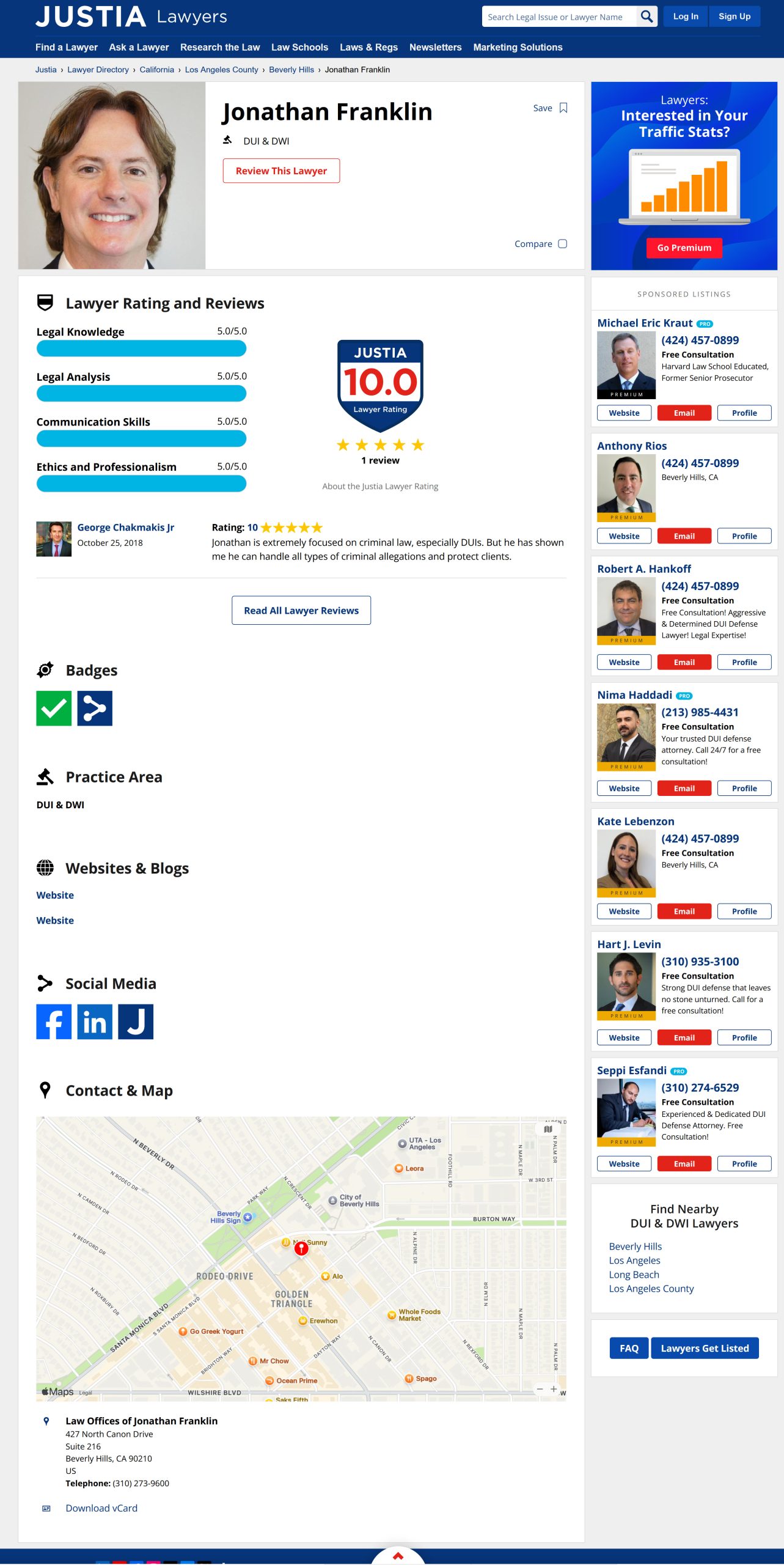
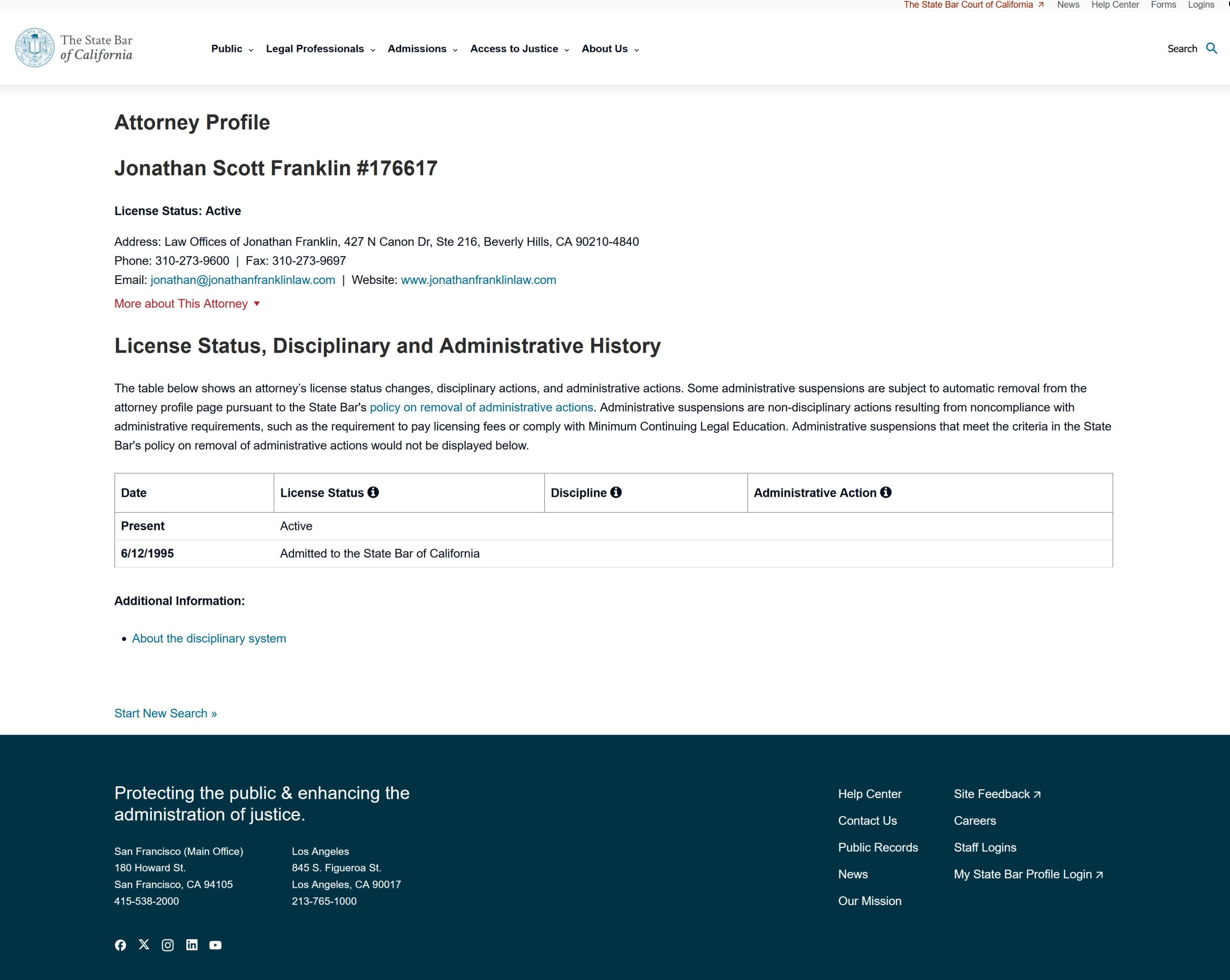
Perelman places Amster within a longer sequence of counsel whose conduct allegedly moved in the same direction: Jonathan Franklin in 2013, Seymour Amster in the 2017 trial and appeal, Shep Zebberman in the 2023–2024 case, and Yisrael Gelb in later appellate work. The claimed common features are failure to investigate police and civilian misconduct, failure to organize supplied evidence, failure to challenge psychiatric labeling, pressure toward plea or treatment-oriented outcomes, omission of stronger innocence and constitutional issues, and protection of the existing official narrative.

The lawyers’ similar conduct does not by itself prove communication or a joint agreement. Each representation must be evaluated on its own record. The pattern is relevant to motive and transmission if records show shared sources, referrals, third-party payment, family influence, communications, repeated unexplained psychiatric strategies, or knowledge passed from one matter into another.

Jonathan Franklin

Franklin allegedly stated, “I’m not going to say anything bad about a police officer,” failed to investigate the 2013 charges, and presented C.A.M.P. or MEU involvement as police help rather than clearly disclosing its mental-health function. That earlier experience gave Amster a reason to investigate whether a psychiatric and police narrative already existed before 2017.

Shep Zebberman

Zebberman allegedly received a vast evidence archive in the later case but failed to convert representative materials into admissible proof, challenge the larger hostility, or prevent continued psychiatric characterization. The later similarity is not proof of Amster’s coordination; it strengthens the need to determine whether a common record or label moved from case to case.

Yisrael Gelb

Gelb allegedly declined to develop ineffective-assistance and extra-record issues capable of challenging trial counsel. The resulting concern mirrors Amster’s appellate conflict: appellate representation that leaves prior counsel’s omissions unexamined allows the same incomplete narrative to acquire finality and later governmental use.

Richard Barnwell

Barnwell allegedly told Perelman to wait outside a courtroom, failed to check him in, later said the matter had been dismissed although no judge had announced dismissal, and was followed by warrants and arrests. Those allegations require the minute order, appearance record, check-in procedure, communications, and warrant chronology. They are relevant to the rotating-counsel theme but do not presently establish a link to Amster.

Amster’s External Professional and Political Connections

Public sources show that Amster had a substantial professional life beyond this case. He handled prominent criminal cases, federal habeas litigation, disability and education litigation, and representation connected to politically active persons. He served or serves in nonprofit or advocacy roles involving students, veterans, disability, or mental-health support. Those associations establish experience and access; they do not establish that he imported a partisan agenda into Perelman’s trial.

The stronger political analysis arises from what Amster actually said and did in the courtroom. He converted a fact-specific criminal trial into a societal question about how to manage “the mentally ill,” whether institutions should again be used, whether passive conduct prevents future violence, and whether society should fear a person who might pick up a gun. This is political in the governance sense: it concerns who belongs in ordinary society, who should be monitored or confined, and whether predicted danger can substitute for adjudicated conduct.

The dossier should not infer motive merely because Amster represented controversial clients, belonged to a religious or cultural group, worked with mental-health organizations, or held political relationships. Association and identity are not proof. The probative facts are his words, omissions, conflicts, communications, financial arrangements, evidence decisions, and the parties who benefited from them.

Dinse’s Apparent Motive and the Benefit Produced by Amster’s Representation

Perelman’s theory is that Dinse favored aggressive community policing in which residents identify unwanted persons, circulate images and locations, repeat psychiatric or dangerousness labels, and generate police contacts until exclusion, treatment, arrest, towing, or confinement becomes easier. Public reporting on the Valley Facebook groups and the Schellenberg complaint supplies partial external support for the existence of such methods. It does not establish every element of Perelman’s account or a personal plan by Dinse to remove him.

Amster’s representation benefited that alleged objective in several ways. It left Dinse’s anonymous and geographically dispersed sources untested; left the citation and residence evidence undeveloped; failed to seek the complete misconduct and communication record; allowed psychiatric labels to replace source analysis; and gave the jury a defense-authored account of Perelman as paranoid, mentally ill, and potentially violent. The resulting conviction and treatment conditions could then be cited as institutional confirmation of the very narrative the defense should have challenged.

This is the clearest overlap between Amster and Dinse. It does not depend on proving a private meeting. The functional alignment is visible in the record: Dinse supplied the community concern, Amster failed to test its origin, and Amster supplied the psychiatric-dangerousness interpretation. Whether that alignment was accidental, incompetent, ideological, financially influenced, or coordinated remains the central motive question.

What the Dossier Can and Cannot Present as Established

Established or directly documented

· Amster represented Perelman at the 2017–2018 trial and on the direct appeal.

· He argued protected speech, provocation, and vigilante themes but did not present the full objective defense described by Perelman.

· He called the case a mental-health crisis and invoked institutionalization, paranoia, guns, Parkland, and Columbine in closing.

· Dinse testified to extensive social-media, field, and telephone contacts, including distant callers asking whether Perelman was a problem.

· The appellate court found the section 1118.1 argument forfeited or undeveloped and rejected the preserved appellate claims.

· Multiple court reporters appear in the proceedings, and the clerk record includes a reporter correction.

Supported allegations requiring adjudication

· Amster failed to review or use substantial evidence supplied by Perelman.

· The Bernard, Scroggins, citation, residence, HOA, and police-report materials would have materially altered the defense.

· Dinse or police-connected groups circulated information that influenced witnesses or enforcement.

· Jurors possessed undisclosed prior knowledge or answered voir-dire questions inaccurately.

· A signature associated with action against Schellenberg was forged or caused to be forged by Dinse.

Inferences not yet proved as direct facts

· Amster intentionally lost the case.

· Amster entered a secret agreement with Dinse, prosecutors, family, community groups, or later counsel.

· The reporter changes reflect alteration rather than ordinary staffing and correction.

· Every later civilian participant belonged to one centrally directed organization.

· A partisan, religious, racial, or financial affiliation explains Amster’s choices.

Preserving these categories does not weaken the dossier. It prevents documented facts from being dismissed because a still-unproved motive was stated too absolutely. The pattern can be presented in full while the missing communications and files are pursued.

Profile Conclusion

The record portrays a lawyer who understood the language of constitutional defense but did not build the factual structure necessary to make that defense work. Amster recognized protected expression, provocation, vigilante conduct, and the prosecution’s attempt to portray Perelman as dangerous. Yet he failed to test the police-centered information network that made multiple accusations appear independent; failed to organize representative objective evidence; failed to fully develop self-defense, report reversal, and witness motive; and affirmatively characterized his client through institutionalization, paranoia, firearms, Parkland, and Columbine.

His subsequent decision to handle the appeal magnified the problem. It placed him in the position of reviewing his own investigation, objections, concessions, and preservation failures. The appellate presentation continued the psychiatric premise, relied heavily on the prosecution’s factual frame, and forfeited or narrowed significant issues. The result was not simply a lost appeal; it was an appellate record that protected the incompleteness of the trial record.

The available evidence therefore supports a detailed investigation into whether Amster’s representation crossed from deficient performance into purposeful adverse representation or abandonment. It also supports examination of whether his trial and appellate choices functionally advanced Dinse’s police-community narrative and a preventive-control model in which psychiatric labeling and predicted future risk replace incident-specific proof. A direct agreement, political affiliation, or intentional plan to lose has not yet been proved. The pattern is sufficiently concrete, consistent, and consequential to require the files, communications, and sworn explanations that could resolve motive.

Source and Reliability Guide

Primary case materials reviewed

· 2017 reporter’s transcripts, including the trial testimony, instruction discussions, section 1118.1 proceedings, and defense closing at approximately RT 999–1005.

· Appellant’s opening brief and reply brief prepared in the appeal from the 2018 judgment.

· Respondent’s brief and the California Court of Appeal opinion, including the discussion of section 1118.1 forfeiture, vouching, instructional claims, sentencing, and the state and federal punishment provisions.

· Current seven-book master record used only as an index to issues and source locations, not as independent proof.

Independent public sources

· State Bar of California attorney search: Seymour I. Amster, State Bar No. 105308, active, admitted December 1982.

· Murdoch v. Castro, 365 F.3d 699 (9th Cir. 2004), and 489 F.3d 1063 (9th Cir. 2007), reflecting Amster’s federal habeas and confrontation-clause experience.

· Smith v. Los Angeles Unified School District, Ninth Circuit proceedings, reflecting federal appellate work involving disability and educational policy.

· Los Angeles Times, “Cop’s use of Facebook put ‘target on our back,’” reporting on Valley Facebook groups, LAPD participation, Dinse, and the Schellenberg allegations.

· Rex Schellenberg v. City of Los Angeles et al., C.D. Cal. Case No. 2:20-cv-01313, complaint and docket. Allegations are not treated as adjudicated findings.

· Separate Schellenberg property case, C.D. Cal. Case No. 2:18-cv-07670, distinguished from the Dinse-specific 2020 action.

Reliability categories used in this profile

· Documented: appears in a transcript, brief, opinion, docket, official profile, or authenticated record.

· Attributed allegation: asserted by Perelman, Schellenberg, or another identified speaker but not yet adjudicated.

· Inference: a conclusion drawn from the direction, sequence, or consistency of documented choices.

· Unproved proposition: secret agreement, intentional loss, political coordination, or instruction by Dinse remains a subject for investigation unless direct evidence is obtained.
EVIDENTIARY SYNOPSIS – Charles Sean Dinse, Karine T. Philips, the Topanga “Crimebusters” Network, Mental-Health Labeling, and the 2017 Kevin Perelman Matter

Posted: October 4, 2026 in Uncategorized
Tags: , , , , , , , , , , , , , , , , , , , , , , , , , , , , , , , , , , , , , , , , , , , , , , , , , , , , , , , , , , , , , , , , , , , , , , , , , , , , , , , , , ,

Purpose and Scope

This memorandum organizes publicly available information concerning LAPD Senior Lead Officer Charles “Sean” Dinse, Los Angeles Deputy City Attorney Karine T. Philips, the LAPD Topanga Division, the private Facebook groups commonly known as “Crimebusters of West Hills and Woodland Hills” and “Homeless Transient Encampments of our West Valley,” and their potential relevance to Kevin Perelman’s 2017 Van Nuys prosecution, identified by Perelman as case 7VW04099.

The objective is not to state unproved criminal allegations as established fact. Rather, it is to identify what the public record actually proves; what established news organizations, civil-rights organizations, litigants, and activists have alleged; what Kevin Perelman reports occurred to him; where those bodies of evidence overlap; and what documents would be necessary to determine whether government officials or community participants improperly coordinated against him.

That evidentiary distinction is critical. The strongest material does not require a theory of a massive or worldwide conspiracy. There is already a documented local factual record showing that Topanga police personnel participated in private neighborhood Facebook groups that tracked particular people, circulated personal information, discussed homelessness and mental illness, and generated law-enforcement activity. There is also a contemporaneous 2018 civil-rights complaint that specifically identifies “Mr. Perelman,” his automobile and his license plate.


I. Principal Individuals

A. Charles “Sean” Dinse

Sean Dinse has served as an LAPD Senior Lead Officer associated with the Topanga Community Police Station and Woodland Hills. LAPD’s current Topanga station directory continues to identify Officer Sean Dinse as a Senior Lead Officer.

The Senior Lead Officer position is particularly relevant because it is built around community policing, neighborhood contacts, identifying recurring local problems, working with neighborhood-watch organizations, and transmitting information between the community and police.

Dinse’s publicly expressed policing philosophy emphasized neighborhood-watch participation. Reporting concerning his 2019 campaign for Los Angeles City Council described him as advocating the prevention and deterrence of crime through Neighborhood Watch. Los Angeles Magazine subsequently reported that he regularly used the West Valley Facebook groups to obtain information about homeless encampments and to track specific homeless individuals.

Dinse also publicly expressed a strong connection between homelessness, irrational behavior, substance abuse and mental illness. In February 2018 West Hills Neighborhood Council minutes, Dinse reportedly stated that many homeless people officers encountered were homeless because of mental illness or drug use.

During his 2019 City Council campaign, Dinse told the Los Angeles Times that supportive housing by itself was insufficient and said that authorities had to stabilize irrational behavior caused by drug addiction and potential mental illness before a person could successfully accept or retain housing.

That statement is not misconduct by itself. It is nevertheless relevant because it establishes Dinse’s publicly expressed conceptual framework: certain individuals encountered in public spaces were viewed through a combined crime / nuisance / addiction / mental-illness framework rather than solely as people requiring housing assistance.

Dinse’s public record is not exclusively punitive. CBS Los Angeles reported a July 2017 incident in which he assisted a homeless mother and daughter, publicized their circumstances, and helped obtain community assistance and temporary lodging. Any balanced legal presentation should acknowledge this evidence because it demonstrates that his dealings with homeless individuals were not uniformly hostile.

The issue is therefore not that every interaction Dinse had with a homeless or mentally ill individual was abusive. The relevant issue is whether, in certain cases, he used police information and community networks to identify, characterize, locate, monitor, displace or generate enforcement against selected individuals.


B. Karine T. Philips

Karine T. Philips is a California attorney, State Bar No. 186645, admitted December 10, 1996. As of October 2026, the State Bar lists her license as Active, identifies her employer as the Los Angeles City Attorney’s Office, and shows no public disciplinary action in the Bar’s disciplinary-history table.

Philips was formally assigned as the Neighborhood Prosecutor for LAPD Topanga Division no later than 2014. Contemporary City Attorney assignment lists distinguish Philips from the prosecutors assigned to Van Nuys and West Valley: Philips was assigned specifically to Topanga.

In her own May 2015 public introduction, Philips wrote:

“Hi, my name is Karine Philips and I am your Neighborhood Prosecutor assigned to the LAPD’s Topanga division.”

She said her work focused on improving neighborhood “quality of life” and preventing public-safety problems.

Contemporary reporting described Los Angeles Neighborhood Prosecutors as addressing what were sometimes characterized as “broken windows” offenses, including vandalism, trespassing, loitering, graffiti, prostitution and code violations.

This institutional relationship is central to understanding Philips’s connection with Dinse. She was not merely a prosecutor who later happened to encounter a Topanga police officer. Her official job was to serve as the prosecutor embedded with or assigned to Dinse’s LAPD division and its surrounding communities.

That fact provides a legitimate administrative explanation for why Philips could have handled a misdemeanor arising from Topanga in 2017. It does not, by itself, prove that she was specially assigned to Kevin Perelman.

Philips’s public record also contains evidence inconsistent with a simplistic theory that her purpose was always incarceration. At a 2014 neighborhood meeting she promoted the City Attorney’s Neighborhood Justice Program, described as resolving low-level offenses through alternatives designed to keep offenders out of the traditional justice system.

That countervailing evidence should remain in the record.


II. The Crimebusters / Homeless Encampment Facebook Network

Two private Facebook communities became central to the later controversy:

Crimebusters of West Hills and Woodland Hills, created in approximately 2016, and Crimebusters Homeless Encampments / Homeless Transient Encampments of our West Valley, created in approximately 2017.

The groups were associated with LAPD volunteer Fern Peskin-White and included participation by current and former LAPD personnel. According to the formal 2018 civil-rights complaint, the groups primarily consisted of residents of West Hills, Woodland Hills, Canoga Park and Winnetka and were nominally intended to centralize photographs, videos and community reports about suspicious or criminal behavior.

The dispute was over what the groups became in practice.

A coalition consisting of the Western Regional Advocacy Project, National Law Center on Homelessness & Poverty, Los Angeles Community Action Network, and National Coalition for the Homeless submitted a complaint to the California Attorney General dated August 1, 2018 and updated November 20, 2018. The complaint asked for an investigation into potential civil- and human-rights violations involving the Facebook groups and government participation.

The ACLU of Southern California subsequently cited this specific Attorney General complaint, along with the 2019 Knock LA and KTown for All investigations, in its 2021 report Outside the Law: The Legal War Against Unhoused People. That does not prove every allegation contained in the complaint, but it independently establishes the provenance and significance of these materials within the civil-rights community.


III. What the 2018 Attorney General Complaint Alleged About Sean Dinse

The 2018 complaint contains allegations considerably more specific than generalized criticism of LAPD.

It alleged that members of the Facebook groups distributed names, criminal histories, information about mental-health status or treatment history, and drug or alcohol dependency information concerning people they were discussing.

It then singled out Sean Dinse.

The complaint alleged that Dinse repeatedly used his position as an LAPD Senior Lead Officer to obtain and publicize sensitive information concerning homeless individuals. It referenced screenshots identified as Figures 3 through 7.

Most significantly for the Perelman matter, the complaint states that, in one particular case, Dinse responded to a Facebook member complaining about a person accused of littering by sharing a screenshot of a law-enforcement database entry displaying that person’s personal information. The complaint cross-references the underlying littering complaint as Figure 12 and Dinse’s database screenshot as Figure 7.

This cross-reference becomes highly significant because Figure 12 is then described expressly as involving Mr. Perelman.


IV. The August 2017 “Mr. Perelman” Post

The Attorney General complaint states that an August 2017 Crimebusters of West Hills and Woodland Hills post accused an individual of littering, displayed photographs of his belongings and automobile, and instructed members to:

“Notice Mr. Perelman’s license plate.”

The complaint concluded that dissemination of those identifying photographs could expose the individual to targeted abuse.

This is one of the most important pieces of independent evidence in the entire matter.

The complaint does not merely contain the surname “Perelman.” It contains a convergence of details:

Kevin Perelman; August 2017; Woodland Hills/Topanga; an allegation of littering; photographs of his car and property; specific attention directed to his license plate; and an LAPD Senior Lead Officer whose database disclosure is cross-referenced by the complaint to the same littering allegation.

Perelman states that the personalized license plate on his vehicle read TARGETD.

Perelman further states that the TARGETD plate was not an invitation to follow him and was not the origin of his concerns. His position is that the plate was selected because he already believed he had been subjected to repeated surveillance, harassment and targeting, including conduct involving Dinse. That explanation is Perelman’s account and should be identified as such unless supported by separate contemporaneous documentation establishing when the plate was obtained and why.

The legal significance does not depend on whether anyone agrees with the message expressed by the plate.

A personalized license plate saying TARGETD does not itself authorize police officers or private citizens to follow the vehicle, circulate identifying information for harassment, manufacture evidence, make false reports, or use confidential police databases improperly.

The relevant question is what the government actors and private participants actually did.


V. The Dinse–Perelman Database Cross-Reference

The cross-references in the Attorney General complaint deserve particular attention from counsel.

The complaint first states that Dinse responded to a Facebook member complaining about a person allegedly littering and posted a screenshot from a law-enforcement database containing that individual’s personal information. That complaint is identified as Figure 12.

Only paragraphs later, Figure 12 is expressly described as the August 2017 post involving Mr. Perelman, his alleged littering, his automobile and his license plate.

If those figure references accurately describe the original exhibits, this would appear to mean that Dinse accessed and disseminated law-enforcement database information in direct response to the Perelman littering discussion.

That proposition should not yet be represented as conclusively proven until the original high-resolution Figures 7 and 12 are obtained and authenticated. But it is substantially more than a speculative association.

It is a specific written allegation in a complaint prepared by multiple established homelessness and civil-rights organizations in 2018, before the later Dinse litigation and before much of the subsequent publicity.

For an attorney reviewing the 2017 Perelman prosecution, recovering the original Figures 7 and 12 should therefore be treated as a high priority.

The inquiry should establish exactly whose database record appeared in Figure 7, what information was displayed, which system produced it, who accessed that system, the date and time of the search, whether an official law-enforcement purpose existed, and whether any of that information was transmitted to witnesses or the prosecuting City Attorney.


VI. A Critical Factual Discrepancy: “Homeless” Versus Homeowner

The Attorney General complaint repeatedly describes the person in the Figure 12 incident as a “homeless individual.”

Kevin Perelman states that this characterization was false and that he was a homeowner residing in an HOA townhouse community at the relevant time.

That discrepancy should not be overlooked.

If property records, HOA records, utility records or other evidence establish that Perelman was a resident homeowner in August 2017, then lawyers should avoid adopting the complaint’s characterization of him as homeless.

The discrepancy may be analytically useful for another reason: it illustrates how an individual discussed inside an anti-homeless or “transient” social-media environment could potentially be placed into a preexisting social category that did not accurately describe him.

It does not establish who caused the misclassification.

The original Figure 12 should therefore be examined to determine whether the Facebook poster itself called Perelman homeless or transient, or whether the authors of the later Attorney General complaint inferred that status because they were analyzing anti-homeless Facebook groups.

That difference matters.


VII. Dinse, Mental-Illness Labels, and Rex Schellenberg

The strongest independently reported example of Dinse applying a mental-illness characterization to a particular person involves Rex Schellenberg.

In February 2020, Schellenberg filed a federal civil-rights action against the City of Los Angeles and Sean Dinse under 42 U.S.C. §1983. Federal docket records confirm Dinse was individually named as a defendant.

The Los Angeles Times reported that Schellenberg alleged Dinse posted information identifying where Schellenberg was staying so that residents would contact police, thereby giving officers a supposed “pretextual basis” to force him to move or seize his property.

That allegation is important because it describes an operational sequence:

community identification → dissemination of location → repeated calls or complaints → police contact → asserted legal justification → displacement or property enforcement.

The Times further reported that Dinse had publicly suggested Schellenberg had probably lost housing because of “drug addiction/mental illness.”

Schellenberg specifically disputed those labels and asserted in the lawsuit that he was neither a drug addict nor mentally ill apart from the ordinary stress and trauma associated with living on the streets.

No court judgment establishing that Dinse violated Schellenberg’s rights was located in this research. The statements are allegations contained in litigation and reported by reputable news organizations.

Nevertheless, the Schellenberg case demonstrates that Kevin Perelman is not the only person to have alleged a combination of:

individualized tracking by Dinse; dissemination of location information; community reporting; a mental-illness/addiction characterization; vehicle-related enforcement; and police action allegedly designed to create a basis for displacement.

That comparison is potentially significant.

It does not establish that whatever happened to Schellenberg necessarily happened to Perelman.

It establishes an independent factual reason for counsel to examine Dinse’s conduct toward Perelman rather than dismissing the issue simply because Perelman describes himself as having been targeted.


VIII. Broader Reporting Concerning Dinse and the Facebook Groups

Los Angeles Magazine independently reported in August 2019 that Dinse regularly used the groups to obtain information about homeless encampments and to track specific homeless individuals. The publication reported that LAPD had conducted a formal review after complaints concerning the groups. Investigators reportedly found “demeaning” comments concerning homeless people, and participating officers were temporarily asked not to post while the review was underway.

The groups contained rhetoric suggesting the use of baseball bats, fire hoses, pigeon spikes, bleach, stink bombs, poison oak and other tactics against homeless people, according to screenshots reviewed by the publication. Los Angeles Magazine appropriately clarified that the group’s administrator disputed characterizing the groups themselves as anti-homeless vigilante organizations and said such behavior was discouraged.

This distinction is essential.

The existence of offensive or violent comments inside a group does not establish that Dinse or Philips wrote, endorsed or acted upon those particular comments.

The legally relevant questions are whether government personnel participated, what information they supplied, what enforcement resulted, and whether they knew about or facilitated unlawful conduct by private participants.


IX. Knock LA’s Reporting Concerning Dinse, Rygh and Rehabilitation / Wellness Homes

A separate August 2019 Knock LA investigation reported allegations that Dinse and former Topanga Senior Lead Officer Brent Rygh had provided community members with privileged background information regarding people residing in residential rehabilitation or wellness homes. According to the publication’s sources, neighborhood complaints followed and a residence eventually closed.

Knock LA also reported that Dinse routinely emphasized documenting people and activity so that alleged nuisance activity could be removed from neighborhoods, and that particular individuals were repeatedly tracked through the groups.

These allegations are not judicial findings.

They are nevertheless relevant because they independently concern the same intersection of policing, neighborhood groups, personal background information, behavioral-health-related facilities, and community pressure that warrants examination in the Perelman matter.


X. Karine Philips and the Crimebusters Network

The evidence regarding Philips requires greater caution than the Dinse evidence.

A 2019 KTown for All article, reproduced in surviving copies and later cited by the ACLU, listed numerous LAPD personnel and Deputy City Attorney Karine Philips as members of the controversial Facebook-group environment. The reproduced list includes Dinse, Brent Rygh, Karen Rayner, Duke Dao, Daryl Scoggins, Gabriel Ahedo, John Catalano, Kari McNamee, Jose Fernandez, LAPD command personnel and Philips.

This is significant because Philips simultaneously occupied the official role of Topanga Neighborhood Prosecutor.

It creates a potential overlap between:

the prosecutor responsible for Topanga quality-of-life prosecutions;

the LAPD officers supplying or receiving neighborhood intelligence;

private Facebook groups discussing targeted individuals;

and community witnesses or complainants.

However, the public material located to date does not establish that Philips personally authored threatening Facebook posts, supplied confidential medical information, encouraged anyone to assault a homeless person, or personally instructed anyone to stalk Kevin Perelman.

No Philips-authored screenshot showing such conduct was located during this investigation.

Membership and participation are not synonymous.

That distinction should be preserved in every version of this memorandum intended for attorneys, journalists or publication.


XI. Edward Ryan’s Specific Allegations Concerning Philips, Dinse and Perelman

Separate from the mainstream reporting and the original Attorney General complaint is material published by activist Edward Ryan.

Ryan specifically alleged that Philips prosecuted Kevin Perelman while Philips, Dinse and civilian witnesses were associated with the Crimebusters group. He further alleged that posts concerning Perelman’s location and automobile occurred around court proceedings and that this association was not disclosed during the prosecution.

Ryan’s material goes considerably further than the original civil-rights complaint. He alleges prosecutorial conspiracy, witness impropriety and intentional targeting.

Those assertions must be treated as allegations by Ryan, not established facts.

The valuable aspect of Ryan’s material is that it identifies highly specific factual questions that are capable of verification:

Was Philips actually a member of the relevant group during the Perelman prosecution?

Was Dinse?

Were any prosecution witnesses members?

Were Perelman’s location, court appearances or automobile discussed in the group contemporaneously with the case?

Did Philips know about those discussions?

Were any group-generated photographs, complaints, police information or witness contacts incorporated into the prosecution?

Were these relationships disclosed to the defense?

Those are discoverable historical questions, not matters of belief.


XII. Kevin Perelman’s 2017 Case

Kevin Perelman identifies his 2017 Van Nuys case as 7VW04099 and identifies Karine Philips as the prosecutor.

Perelman reports that the prosecution arose from events involving community members and that it ultimately involved allegations such as littering and/or distribution of cards or materials.

For purposes of this memorandum, those procedural details should be verified against the certified docket, charging document, police reports, transcripts and minute orders before being quoted as final fact.

What can already be independently stated is that during August 2017, while Philips was Topanga’s assigned Neighborhood Prosecutor, a private Crimebusters post concerning a “Mr. Perelman” accused him of littering, circulated photographs of his automobile and belongings, and specifically told other group members to notice his license plate.

The Attorney General complaint further appears to cross-reference this same littering incident to an instance in which Dinse allegedly posted law-enforcement database information.

This makes the exact chronology of 7VW04099 extremely important.

Counsel should determine whether the Facebook posts preceded arrest, charging, arraignment, witness contact or trial; whether they occurred during an active prosecution; and whether anyone in the prosecution team knew of the group’s activity.


XIII. The TARGETD License Plate

Perelman’s position regarding his personalized plate should be stated clearly rather than allowing the plate to become a substitute for evidence.

Perelman states that he obtained or used the plate TARGETD because he believed that Sean Dinse and others had already been targeting or harassing him.

Accordingly, his contention is that:

the plate was a reaction to what he perceived and documented as prior conduct;

the plate did not cause the targeting;

and the existence of the plate cannot rationally justify subsequent monitoring.

Independent public evidence presently confirms only the latter part of the chronology: by August 2017, members of the Crimebusters group were being specifically directed to notice Perelman’s license plate.

For a lawyer, the best way to establish the first part would be to obtain DMV records showing when the TARGETD plate was issued and then identify documented encounters with Dinse or Topanga personnel occurring before that date.

If evidence demonstrates that Dinse-related activity preceded issuance of the plate, it would materially answer any attempt to portray the license plate itself as the origin of Perelman’s targeting concerns.


XIV. Apparent Operational Objectives and Motives

“Motive” must be divided into what participants publicly said they wanted and what remains inferential.

Sean Dinse

The strongest documented objectives attributable to Dinse involve neighborhood safety, Neighborhood Watch, nuisance control, crime prevention and the treatment of homelessness as intertwined with addiction and mental illness.

He publicly advocated neighborhood-watch policing and was reported to use Facebook groups to gather information concerning encampments and particular individuals.

He publicly argued that irrational behavior connected to addiction or potential mental illness needed to be stabilized before housing would work.

The Attorney General complaint alleges a more aggressive operational method: using law-enforcement access to supply sensitive information to civilian groups that were identifying and monitoring individuals.

The Schellenberg lawsuit alleges an even more specific mechanism: publicize an individual’s whereabouts, encourage residents to call police, and thereby generate what the plaintiff characterized as a “pretextual basis” for police removal or property seizure.

If evidence establishes that a comparable mechanism was employed against Perelman, then the relevant motive need not be described as mysterious or global. It could be framed much more concretely as an effort to classify an individual as a neighborhood nuisance or threat, mobilize community complaints, create repeated police contacts, and ultimately obtain enforcement or judicial restrictions.

Whether that occurred in Perelman’s case remains to be proved.

Karine Philips

Philips herself publicly described her mission as improving neighborhood quality of life and preventing public-safety problems.

Her position placed her on the prosecutorial side of the same community-policing structure within Topanga.

Thus a plausible institutional motive existed for Philips to pursue low-level or quality-of-life cases generated through Topanga officers and neighborhood complaints: doing so was part of her job.

The more serious question is whether that ordinary institutional role crossed a constitutional or ethical line because of undisclosed relationships, social-media participation, false evidence, retaliatory motive or the use of improperly acquired information.

No public source located so far resolves that question.


XV. Mental-Illness Labeling as a Potential Enforcement Mechanism

The documented materials justify examining mental-health labeling carefully without claiming more than the evidence proves.

The 2018 Attorney General complaint specifically alleged that private information circulated in the Facebook groups included people’s mental-health status and treatment histories, and it specifically accused Dinse of using his police position to access and distribute sensitive information.

The Schellenberg litigation independently alleged that Dinse publicly characterized an individual as probably suffering from “drug addiction/mental illness,” a characterization the individual disputed.

Dinse also publicly associated homelessness with mental illness and addiction in his governmental and political statements.

Those facts establish that mental-health characterization was part of Dinse’s documented discourse and was allegedly attached to specific people.

They do not establish that every mental-health concern expressed by Dinse was fabricated.

They also do not yet establish that Dinse gave Philips false psychiatric information about Kevin Perelman.

That is the evidentiary bridge that must be investigated.

If Perelman’s 2017 transcripts, probation proceedings, police reports or later records show that prosecutors or judges suddenly began receiving psychiatric descriptions not supported by legitimate medical evidence, counsel should determine where those descriptions originated.


XVI. Allegations of Forced Psychiatric Treatment or Institutionalization

The public evidence located does not presently establish that either Dinse or Philips personally possessed or exercised unilateral power to commit Perelman or another individual to a psychiatric institution.

No independently verified document located during this research establishes that Philips ordered a §5150 detention, fabricated a psychiatric diagnosis, personally arranged involuntary medication, or directed a psychiatric facility to imprison Perelman.

Perelman states that he possesses evidence concerning unlawful confinement, false mental-health representations and community coordination. Those materials should be evaluated separately on their own evidentiary merits.

The strongest public evidence presently establishes something narrower but still important:

Dinse was accused of disseminating mental-health information;

Dinse publicly characterized Schellenberg in mental-health/addiction terms;

community groups tracked individuals;

Philips occupied the prosecutor position attached to the same LAPD division;

and Philips was later reported as belonging to the same Facebook-group ecosystem.

Whether these ingredients were used together against Perelman requires the underlying records.


XVII. Philips and Later Homeless / Public-Space Enforcement

Philips remained involved years later in issues involving public space.

A January 2023 Winnetka Neighborhood Council agenda identifies City Attorney representative Karine Philips as participating with LAPD regarding park hours and immediately references City Council actions concerning Los Angeles Municipal Code §41.18, the ordinance governing specified sitting, lying, sleeping and property activity within public rights-of-way.

This establishes continuing professional involvement in a legal area affecting homeless and public-space enforcement.

It does not establish misconduct.

It does, however, reinforce that her Topanga-era work and later City Attorney responsibilities included precisely the type of quality-of-life / public-space enforcement relevant to the broader Crimebusters controversy.


XVIII. Governor Newsom and CARE Court

The CARE Court issue should be kept separate from the 2017 case.

Governor Gavin Newsom signed the Community Assistance, Recovery and Empowerment Act, SB 1338, on September 14, 2022.

Therefore CARE Court did not exist in 2017 and could not have authorized or caused conduct in Perelman’s 2017 prosecution.

No evidence located connects Karine Philips personally to Governor Newsom, the drafting of SB 1338 or the creation of CARE Court.

A later institutional relationship does exist. In April 2023 the Los Angeles City Council expressly recognized that because the City Attorney prosecutes misdemeanor crimes and infractions, City Attorney cases could potentially involve people whose matters later intersect with CARE Court.

But this is a post-2022 policy development.

Los Angeles County currently describes CARE Court as a civil program for narrowly defined serious psychotic disorders and states that participants cannot be forced to take medication or remain in the program merely because they were petitioned into it. LPS conservatorship and involuntary commitment are separate legal systems.

For a lawyer evaluating the 2017 matter, attempting to tie Philips or Dinse retrospectively to Newsom’s 2022 CARE Act would weaken the presentation unless independent evidence emerges.

The more compelling investigation concerns the preexisting Topanga network, community-policing apparatus, Crimebusters groups, mental-health information and Perelman prosecution itself.


XIX. Misconduct Findings Concerning Philips

An extensive public search for Philips combined with terms including prosecutorial misconduct, Brady, Giglio, sanctions, discipline, civil rights, false evidence and related concepts produced no published appellate decision establishing prosecutorial misconduct by her and no public State Bar disciplinary record.

The State Bar presently shows her as active, and its public disciplinary table contains no disciplinary action.

That negative evidence must be included.

It does not prove that every decision Philips ever made was proper.

It means that a lawyer should not represent that Philips has an established public disciplinary history when the currently accessible record does not show one.

The potentially relevant misconduct issue in the Perelman matter is instead case specific: whether she possessed undisclosed information, had undisclosed relationships with witnesses or officers, knew of social-media activity involving the defendant, used false information, failed to disclose favorable or impeachment evidence, or participated in retaliatory prosecution.


XX. Potential Disclosure and Conflict Issues for Counsel to Examine

If the factual allegations concerning group membership and prosecution overlap can be authenticated, several questions could become legally significant.

If Philips was a member of the same private group in which the defendant, his vehicle, license plate, location or alleged conduct were being discussed, defense counsel would want to know whether she observed those discussions and whether they influenced charging, witnesses, plea negotiations or sentencing.

If Dinse used a law-enforcement database in response to the Perelman littering post, counsel would want to determine whether the resulting information reached Philips or prosecution witnesses.

If a prosecution witness was simultaneously a participant in a group organizing complaints or monitoring the defendant, that relationship could constitute significant impeachment information.

If Philips knew that witnesses were coordinating outside ordinary police channels and did not disclose that relationship, counsel could examine potential Brady/Giglio, due-process and prosecutorial-ethics issues, depending upon the facts and materiality.

If prosecution was undertaken or particular restrictions were sought because Perelman was criticizing Dinse, LAPD or the Crimebusters network, counsel could examine potential First Amendment retaliation theories.

None of these theories should be asserted as established merely from group membership. They become substantial only if contemporaneous communications, prosecution files or authenticated posts establish the connection.


XXI. The First Amendment / Website Issue

Perelman states that his cards, writings and website criticized Sean Dinse, LAPD and people he believed were participating in harassment against him.

If the alleged “littering” or card-distribution prosecution involved literature directing people to a website critical of Dinse or Topanga personnel, the content and handling of those materials deserve careful examination.

The critical questions are whether enforcement targeted the physical conduct itself—for example actual unlawful littering—or whether the content and viewpoint of Perelman’s speech contributed to investigation, charging, witness mobilization, probation conditions or punishment.

The contemporaneous Facebook activity is relevant because it may reveal what police and community members were saying about Perelman and his speech at the same time.

An attorney should therefore obtain not only the charging documents but the actual cards, photographs, Facebook posts, officer communications and any statements concerning Perelman’s website.


XXII. Strongest Evidence Versus Weakest Inferences

For legal presentation, the evidence can presently be ranked by reliability.

Strongly documented: Philips was the officially assigned Topanga Neighborhood Prosecutor; Dinse was a Topanga Senior Lead Officer; private Crimebusters groups existed and included active police participation; established civil-rights organizations filed a formal Attorney General complaint; that complaint names a “Mr. Perelman” in an August 2017 littering/automobile/license-plate post; the complaint alleges Dinse used a police database in response to the littering complaint cross-referenced as Figure 12; Dinse was later individually sued in federal court; independent journalism reported allegations that Dinse tracked Schellenberg, shared his location and characterized him through mental illness/addiction; LAPD itself reviewed the Facebook groups and acknowledged demeaning content existed.

Supported but requiring original exhibits: the proposition that Dinse’s Figure 7 database disclosure specifically displayed Kevin Perelman’s information; Philips’s exact membership status and participation during the precise dates of Perelman’s prosecution; whether prosecution witnesses were Facebook-group members; and whether posts occurred immediately before or after particular court appearances.

Unproven allegations requiring independent evidence: that Philips and Dinse conspired to fabricate 7VW04099; that Philips instructed civilians to assault or batter Perelman; that either official intentionally created a false psychiatric diagnosis; that they attempted to force Perelman into a mental institution; or that Governor Newsom/CARE Court had anything to do with the 2017 prosecution.

Keeping these categories separate strengthens, rather than weakens, the potentially provable case.


XXIII. Records That Could Resolve the Central Questions

Counsel investigating this matter should seek the original 2018 Attorney General complaint and complete high-resolution appendix, particularly Figures 7, 12 and 13; preserved Facebook posts, comments, group membership logs and administrator records from Crimebusters of West Hills and Woodland Hills and Homeless Transient Encampments of our West Valley; LAPD records identifying database searches of Kevin Perelman or his license plate during the relevant 2017 period; Dinse’s official and personal social-media communications concerning Kevin Perelman, TARGETD, littering, court appearances, cards, Perelman’s website or case 7VW04099; communications between Dinse and Philips; communications involving Fern Peskin-White, Susan Fishman/Fishman-Epstein, Terrance Scroggins or any prosecution witness; City Attorney prosecution files, notes, witness-contact records and electronic communications for 7VW04099; Brady/Giglio or impeachment disclosures; Internal Affairs records concerning Dinse’s Facebook activity and the 2018 social-media investigation; records documenting when Perelman’s TARGETD plate was issued; property or HOA documentation establishing Perelman’s housing status in 2017; and complete court transcripts demonstrating exactly what Philips represented to the judge about Perelman, mental health, witnesses, the cards and the underlying allegations.

The most important evidentiary reconstruction is a minute-by-minute or day-by-day timeline combining:

Facebook activity → Dinse database activity → witness/community activity → police action → prosecutor activity → court proceedings.

If the events align temporally, the significance of the overlap increases substantially.


XXIV. Overall Assessment

The public record does not presently justify stating as established fact that Karine Philips and Sean Dinse criminally conspired to imprison Kevin Perelman or force him into a mental institution.

It does establish something narrower, unusual and worthy of serious investigation.

Philips was the prosecutor officially assigned to LAPD Topanga Division.

Dinse was a Topanga Senior Lead Officer deeply involved in neighborhood-watch policing.

Private Facebook groups involving Topanga police personnel were used to identify and track particular individuals.

Civil-rights organizations formally complained that these groups facilitated cyberharassment, stalking, dissemination of personal information and anti-homeless abuse.

That complaint specifically accused Dinse of distributing information obtained through his law-enforcement position.

The same complaint contains an August 2017 post involving “Mr. Perelman,” an accusation of littering, photographs of his vehicle and a direction to notice his license plate.

Most importantly, the complaint appears to cross-reference that Perelman littering incident with an allegation that Dinse responded by posting information from a law-enforcement database.

Dinse was subsequently sued by another individual, Rex Schellenberg, over allegations that he used Facebook to publicize Schellenberg’s location, encourage resident reporting, create a purported basis for removal or property enforcement, and publicly characterize Schellenberg through “drug addiction/mental illness.”

Independent reporting further documented LAPD review of these Facebook groups and police participation in an environment containing degrading and at times violent anti-homeless rhetoric.

Philips was subsequently reported as a member of the same Facebook-group environment, although no presently located evidence demonstrates that she personally authored threatening posts or distributed confidential information.

For Kevin Perelman, the central legal question is therefore not whether one accepts an overarching theory about every event he has experienced.

The narrower and demonstrably investigable question is this:

Did LAPD Senior Lead Officer Sean Dinse, Topanga Neighborhood Prosecutor Karine T. Philips, prosecution witnesses or members of the Crimebusters network exchange information, monitor Kevin Perelman, disseminate law-enforcement or mental-health information about him, coordinate complaints or witnesses, or otherwise influence the investigation and prosecution in case 7VW04099 without disclosure to the defense?

That question is grounded in contemporaneous public evidence.

It can be answered through records.

And the August 2017 Attorney General complaint’s explicit reference to Mr. Perelman, his alleged littering, his vehicle, his license plate and Dinse’s alleged law-enforcement database disclosure makes obtaining those records substantially more important than treating the matter as merely an unsupported personal suspicion.

Evidentiary Position Regarding Kevin Perelman

Kevin Perelman’s position should be accurately stated as follows:

Perelman maintains that he was already experiencing conduct from Sean Dinse, LAPD personnel and associated community members that he regarded as targeted harassment before the Crimebusters posts highlighted his vehicle. He states that his personalized TARGETD license plate reflected his reaction to that preexisting experience; it was not the cause of it.

Independent evidence has not yet established every component of Perelman’s broader account. It does, however, establish that by August 2017 a private neighborhood group connected to active Topanga law-enforcement personnel was circulating photographs of a Mr. Perelman, accusing him of littering and specifically directing members to notice his license plate. The formal civil-rights complaint contemporaneously characterized this as conduct that could expose the individual to targeted abuse.

That independent evidence should be the starting point for further investigation.

Charles “Sean” Dinse • Karine T. Philips • LAPD Topanga Division Crimebusters / Homeless-Encampment Facebook Groups • Mental-Health Labeling

Posted: October 4, 2026 in Uncategorized
Tags: , , , , , , , , , , , , , , , , , , , , , , , , , , , , , , , , , , , , , , , , , , , , , , , , , , , , , , , , , , , , , , , , , , , , , , , , , , , , , , , , , ,

Relevance to Kevin Perelman’s 2017 Van Nuys Matter (7VW04099) and Illegal Arrests and Trials with community and federal hate mobs and police stalking operations

How to Read This Dossier

The central value of this material is not that every allegation is proved. It is that several independently documented facts intersect in a way that justifies targeted investigation of communications, database access, social-media activity, witness relationships, and prosecutorial knowledge surrounding the 2017 matter.

LabelMeaning
VERIFIED / OFFICIALSupported by an official government record, licensing record, or undisputed institutional record.
REPORTED / ALLEGEDContained in a court filing, civil-rights complaint, or reputable/identified publication; not necessarily adjudicated as true.
CLIENT-SUPPLIEDInformation stated by Kevin Perelman or contained in his materials; should be corroborated with primary records where possible.
OPEN QUESTIONA factual issue that the current public record does not resolve and that should be tested through records, discovery, testimony, or authentication.
NEGATIVE FINDINGA searched-for fact that was not located in the public record; absence of a hit is not proof the event never occurred.

Executive Summary

The strongest public evidence presently supports a narrower—and potentially more useful—investigative theory than a generalized accusation of conspiracy. Karine T. Philips was formally assigned as the Los Angeles City Attorney’s Neighborhood Prosecutor for LAPD Topanga Division by 2014 and publicly described her role as improving neighborhood “quality of life” and preventing public-safety problems. Sean Dinse was and remains publicly listed as a Topanga Senior Lead Officer. These roles placed them inside the same Topanga community-policing / quality-of-life enforcement structure.[2]

Separately, private West Valley Facebook groups—principally “Crimebusters of West Hills and Woodland Hills” and “Homeless Transient Encampments of our West Valley”—became the subject of a 2018 complaint to the California Attorney General and 2019 reporting by Knock LA, Los Angeles Magazine, and the Los Angeles Times. The materials described LAPD participation, individualized tracking of homeless people, circulation of personal information, and rhetoric advocating harassment or violence. Dinse was repeatedly identified as an active officer participant. A 2019 KTown for All investigation, preserved in a surviving reproduction and later cited by the ACLU of Southern California, also listed Deputy City Attorney Karine Philips among group members.[7]

Most important to Kevin Perelman, the surviving reproduction of the 2018 Attorney General complaint describes an August 2017 Crimebusters post accusing “Mr. Perelman” of littering, displaying his belongings and automobile, and directing members to “notice Mr. Perelman’s license plate.” The same reproduced complaint appears to cross-reference that littering incident (Figure 12) to an allegation that Dinse responded to a member’s complaint by posting a screenshot from a law-enforcement database containing personal information (Figure 7). Because the original high-resolution appendix has not yet been authenticated in this research, counsel should treat the Figure 7/Figure 12 connection as a high-priority lead rather than a final factual conclusion.[8]

Perelman states that the vehicle’s personalized plate read TARGETD and that the plate reflected what he regarded as preexisting targeting by Dinse and others; he rejects any inference that the plate itself created a legitimate basis to monitor him. Whatever the motivation for the plate, the legal and evidentiary question is what government personnel and private participants actually did. A personalized plate does not itself confer authority to circulate law-enforcement information, falsify evidence, organize harassment, or retaliate against protected speech.

The most independently documented example of Dinse using a mental-illness/addiction characterization toward a particular individual is Rex Schellenberg. Schellenberg filed a federal civil-rights action against Dinse and the City of Los Angeles in 2020. The Los Angeles Times reported allegations that Dinse publicized Schellenberg’s location so residents would call police, allegedly creating a “pretextual basis” to move him or seize property, and that Dinse had attributed Schellenberg’s housing loss to “drug addiction/mental illness.” Those allegations were not located as a final adjudicated misconduct finding, but they establish a concrete comparator for counsel to evaluate against Perelman’s evidence.[12]

No public appellate decision or State Bar disciplinary record was located establishing prosecutorial misconduct by Philips. Her State Bar profile currently lists her license as Active and shows no public discipline entry. That negative finding should remain in any attorney-facing version of the dossier. The potentially significant question is case-specific: whether Philips knew of, participated in, received information from, or failed to disclose Topanga/Crimebusters activity bearing on Perelman’s 2017 prosecution.[1]

The CARE Act / CARE Court does not provide a causal explanation for the 2017 case. Governor Gavin Newsom signed SB 1338 on September 14, 2022—five years after the events at issue—and Los Angeles County implemented CARE Court later. No evidence located links Philips personally to Newsom or the creation of CARE Court. Later City and County records show only an institutional, post-2022 relationship between local government, mental-health services, first responders, and CARE Court.[17]

Key Findings at a Glance

IssueCurrent EvidenceStrengthNext Step
Philips–Topanga assignmentOfficial records place Philips as Topanga Neighborhood Prosecutor by 2014; she said so herself in 2015.HighObtain 2017 City Attorney assignment/case records.
Dinse–Topanga roleCurrent LAPD directory lists Dinse as Topanga SLO; contemporary reporting identifies him in Woodland Hills.HighObtain 2017 assignment and activity logs.
Crimebusters police involvementMultiple reports and ACLU-cited materials document LAPD participation in private Facebook groups.High / contextualAuthenticate screenshots and membership logs.
Philips in Crimebusters ecosystem2019 KTown for All material, preserved by a mirror and cited by ACLU, lists Philips as a member.MediumRecover original KTown article/screenshots and Facebook member data.
Perelman post, Aug. 2017Surviving complaint text describes “Mr. Perelman,” alleged littering, vehicle photos, and direction to notice his plate.High lead; appendix neededRecover original Figure 12.
Dinse database linkSurviving complaint text appears to cross-reference Dinse database screenshot (Fig. 7) to Perelman littering post (Fig. 12).Potentially very high; not yet authenticatedRecover Figures 7/12 and audit/query logs.
Mental-health labeling comparatorSchellenberg suit/reporting alleges Dinse used “drug addiction/mental illness” characterization and location-sharing.High as evidence of allegation; not adjudicationObtain complaint/exhibits and disposition.
Philips misconduct historyNo public discipline/appellate misconduct finding located.Negative findingDo not overstate; inspect trial-level and internal records.
CARE Act / NewsomCARE Act enacted in 2022, so cannot explain 2017 events.HighKeep separate unless later evidence specifically connects actors.

Chronology: Institutional Roles, Facebook Activity, Perelman Matter, and Later Corroborating Events

DateEventEvidence TypeSource
Dec. 10, 1996Karine T. Philips admitted to the State Bar of California. Current public profile shows Active status and no listed public discipline.Official[1]
June 2014Neighborhood Prosecutor assignment list identifies Karine Philips for Topanga Division; Tamar Galatzan is separately listed for Van Nuys/North Hollywood.Official[2]
2014West Hills Neighborhood Council minutes identify Philips as the new Neighborhood Prosecutor assigned to LAPD Topanga Area and record her presentation on Neighborhood Justice alternatives for low-level offenses.Official[5]
May 4, 2015Philips publicly identifies herself as “your Neighborhood Prosecutor assigned to the LAPD’s Topanga division” and describes a quality-of-life/public-safety mission.Official / self-statement[3]
2016Crimebusters of West Hills and Woodland Hills is reported to have begun. Later investigations identify LAPD volunteers/officers among administrators and members.Reported[9]
2017A homelessness-focused subgroup is reported to have been created; Dinse is reported as participating in Crimebusters-related activity.Reported[9]
July 12, 2017CBS Los Angeles reports Dinse helping a homeless mother and daughter and using social media/community contacts to obtain assistance. This is relevant countervailing evidence.Independent news[15]
Aug. 2017Surviving 2018 complaint text describes a Crimebusters post about “Mr. Perelman,” alleged littering, photos of belongings/car, and instruction to notice his license plate. The same reproduced complaint appears to link the littering complaint to a Dinse law-enforcement-database screenshot.Complaint allegation / high-priority lead[8]
2017Perelman identifies Philips as prosecutor in Van Nuys case 7VW04099. This should be verified against certified docket/transcripts/case file.Client-supplied—
Aug. 1, 2018; updated Nov. 20, 2018Coalition of homelessness/civil-rights organizations submits complaint to California Attorney General concerning the Facebook groups and government participation.Advocacy complaint; provenance corroborated by ACLU[7]
May–Aug. 2019Los Angeles Times, Knock LA, KTown for All, and Los Angeles Magazine publish material about the groups, Dinse, anti-homeless rhetoric, tracking, and police participation. KTown-derived material lists Philips among group members.Independent / advocacy reporting[9]
Feb. 10, 2020Rex Schellenberg files federal civil-rights lawsuit naming Dinse and City of Los Angeles.Court docket[13]
Feb. 11, 2020Los Angeles Times reports Schellenberg allegations of location sharing, pretextual removal, towing, and Dinse’s “drug addiction/mental illness” characterization.Independent news[12]
Sept. 14, 2022Governor Newsom signs SB 1338 / CARE Act. This postdates the 2017 case by five years.Official[17]
Jan. 10, 2023Winnetka Neighborhood Council agenda identifies Philips as City Attorney representative on park-hours issues alongside LAMC §41.18 discussion.Official local record[16]
Apr. 25, 2023Los Angeles City Council motion asks City Administrative Officer, with City Attorney assistance, to examine City role in CARE Court.Official[19]
2026Current LAPD Topanga directory lists Sean Dinse as SLO assignment 21A43; State Bar lists Philips as Active.Official[14]

I. Charles “Sean” Dinse: Documented Role, Public Positions, and Allegations

A. Official Topanga Role

VERIFIED / OFFICIAL: LAPD’s current Topanga Community Police Station page identifies Sean Dinse as a Senior Lead Officer, assignment 21A43. Topanga serves Canoga Park, West Hills, Winnetka, and Woodland Hills.

A Senior Lead Officer is a community-policing position. The relevance here is structural: the role is built around recurring neighborhood problems, community contacts, neighborhood-watch information, and communication between residents and police. That creates legitimate reasons for frequent contact with community groups, but it also makes boundaries concerning private intelligence, social-media participation, confidential records, and targeting of particular individuals especially important.[14]

B. Documented Homelessness / Mental-Illness Framing

During his 2019 City Council campaign, Dinse publicly argued that housing alone could not solve homelessness and that authorities had to “stabilize the irrational behavior caused by drug addiction and potential mental illness before a person can accept housing or keep it.” This is a direct public statement by Dinse, reported by the Los Angeles Times. It does not show illegality. It does show that mental illness and addiction were part of his stated framework for understanding and responding to homelessness.[11]

A separate Los Angeles Times article from September 2019 reported Dinse supporting restrictions on sleeping in “sensitive areas” and raising concerns about children encountering people with mental illness or addiction issues. Together, these public comments show that Dinse’s enforcement philosophy expressly linked some public-space problems to behavioral-health and addiction concerns.

CAUTION: A policy view that some homelessness involves mental illness is not proof that any particular person was mentally ill, nor proof that Dinse fabricated a diagnosis. Individualized labeling must be evaluated person by person.

C. Crimebusters / Facebook Participation

Los Angeles Magazine reported that Dinse regularly used the West Valley Facebook groups to source information about encampments and track specific homeless individuals. The same article reported leaked screenshots containing suggestions of Airsoft guns, bleach, and other tactics to deter homeless people, while noting that the group administrator disputed characterizing the groups as anti-homeless vigilante organizations and said such behavior was discouraged. LAPD told the publication it would address misconduct and would not tolerate hate speech or encouragement of violence.[10]

Knock LA reported that the Crimebusters groups were administered by current or former LAPD personnel/volunteers and that Dinse and former SLO Brent Rygh had longstanding community-policing roles in Woodland Hills and West Hills. Knock LA further alleged that Dinse and Rygh provided privileged background information concerning persons in residential rehabilitation or wellness homes and that residents used the information in complaints. This is an allegation from advocacy journalism, not a judicial finding, and should be presented that way.[9]

The significance is not merely offensive speech by private Facebook users. The potentially material issue is the alleged integration of a private group with official police functions: community members identifying people, officers obtaining or supplying information, repeated reporting, and enforcement activity directed at the same individuals.

D. The 2018 Attorney General Complaint and Alleged Database Disclosure

The ACLU of Southern California’s 2021 report cites the 2018 California Attorney General complaint, the KTown for All article, Knock LA, and Los Angeles Magazine as source material concerning West Valley anti-homeless enforcement. The original KTown-hosted complaint is no longer readily accessible through ordinary web search, but a surviving reproduction preserves extensive text from the complaint.[7]

The surviving reproduced complaint alleges that members circulated names, criminal histories, mental-health status or treatment histories, and drug/alcohol information. It then alleges that Dinse repeatedly used his position to obtain and publicize sensitive information, including a screenshot from a law-enforcement database in response to a member’s complaint about alleged littering. Critically, the reproduced text identifies that littering complaint as Figure 12.[8]

OPEN QUESTION: The original complaint PDF and full-resolution appendix must be obtained. Counsel should not rely solely on the mirror for litigation-grade authentication.

E. Rex Schellenberg: Comparator for Location Tracking and Mental-Health Labeling

On February 10, 2020, Rex Schellenberg filed a federal civil-rights action in the Central District of California against Sean Dinse and the City of Los Angeles under 42 U.S.C. §1983. The docket confirms Dinse was individually named as a defendant.[13]

The Los Angeles Times reported that Schellenberg alleged Dinse posted where he was staying so residents would contact police, allegedly creating a “pretextual basis” to force him to move or seize property. The Times also reported that Dinse had said Schellenberg was probably evicted because of “drug addiction/mental illness”; Schellenberg disputed both labels and alleged repeated improper towing activity involving his van.[12]

The evidentiary value of Schellenberg is comparative, not dispositive. It demonstrates that another identifiable individual independently alleged a sequence involving Dinse, Facebook-based location dissemination, community reporting, vehicle enforcement, displacement, and mental-illness/addiction characterization. A lawyer can compare that alleged sequence to the Perelman chronology without assuming they are identical.

F. Countervailing Evidence Regarding Dinse

A balanced dossier must also include evidence inconsistent with a claim that every Dinse interaction with homeless people was hostile. CBS Los Angeles reported in July 2017 that Dinse responded to a call involving a homeless mother and daughter, concluded they needed help, publicized their story, and facilitated community assistance and motel lodging.[15]

This does not negate the later allegations. It means the defensible issue is not “Dinse hated every homeless person.” The narrower issue is whether he used police authority or private community networks improperly against selected individuals, and whether such conduct affected Perelman.

II. Karine T. Philips: Official Role, Crimebusters Connection, and Misconduct Inquiry

A. Licensing and Career Status

Karine T. Philips, State Bar No. 186645, was admitted to the California Bar on December 10, 1996. The State Bar currently lists her as Active, employed by the Los Angeles City Attorney’s Office, with USC Law School identified as her law school. The public disciplinary/history table shows no disciplinary entry.[1]

NEGATIVE FINDING: This research did not locate a published appellate finding of prosecutorial misconduct, a public Brady/Giglio sanction, a civil-rights judgment against Philips, or a public State Bar disciplinary action. That absence must not be converted into a claim that misconduct is impossible; it means the issue has to be proved from the specific case record.

B. Topanga Neighborhood Prosecutor Assignment

A June 2014 Neighborhood Prosecutor assignment list placed Philips at Topanga Division. The same list assigned Tamar Galatzan to Van Nuys and North Hollywood. This is important because it shows Philips’s Topanga relationship was formal and predated Perelman’s 2017 case; it was not a role created specifically for him.[2]

“Hi, my name is Karine Philips and I am your Neighborhood Prosecutor assigned to the LAPD’s Topanga division.” [3]

In that 2015 message, Philips described herself as focused on improving neighborhood quality of life and preventing public-safety problems. LAist described the Neighborhood Prosecutor program as addressing “broken windows” or quality-of-life offenses such as vandalism, loitering, trespassing, graffiti, prostitution, illegal dumping, and code violations.[3]

Thus, if a misdemeanor case originated from Topanga-area community complaints, an ordinary institutional explanation exists for Philips to become involved. The legally significant question is not simply why she was there, but whether she had undisclosed relationships, off-record information, group participation, or retaliatory reasons affecting the handling of a particular defendant.[4]

C. Neighborhood Justice / Alternative Enforcement

West Hills Neighborhood Council minutes from 2014 record Philips presenting the Neighborhood Justice Program, described as an alternative approach to low-level offenses intended to keep offenders out of the conventional justice system. This is meaningful counterevidence to any claim that her public mission was categorically to institutionalize or incarcerate people.[5]

D. Philips and the Crimebusters Ecosystem

A 2019 KTown for All investigation, preserved in a surviving reproduction and cited by the ACLU, listed Deputy City Attorney Karine Philips among members of the West Valley Facebook-group environment together with numerous LAPD personnel, including Sean Dinse. The public materials located here do not establish that Philips authored the violent or demeaning posts described by other publications.[7]

This distinction is critical. Membership can be relevant—especially for a prosecutor assigned to the same police division—but membership alone does not prove knowledge of every post, agreement with other members, receipt of confidential information, or participation in a conspiracy. The factual questions are whether Philips was a member during the precise 2017 prosecution period, what she could see, whether she posted or communicated, and whether group-derived information entered the prosecution file.[8]

OPEN QUESTION: Recover the original member list, platform records, screenshots, or archived page showing Philips’s membership date, account identity, activity, and access.

E. Later Public-Space / §41.18 Context

A January 2023 Winnetka Neighborhood Council agenda identifies Philips as a City Attorney representative providing input on park-hours issues in a section that also references Los Angeles Municipal Code §41.18 and public-right-of-way determinations. This supports a continuing professional connection to quality-of-life/public-space enforcement, but it does not establish misconduct or prove a 2017 mental-health agenda.[16]

III. The Crimebusters Network and the August 2017 “Mr. Perelman” Material

A. What the Groups Were

The principal groups were reported as “Crimebusters of West Hills and Woodland Hills” and “Homeless Transient Encampments of our West Valley.” Investigations described them as private Facebook forums used by residents to report suspected crime, nuisance activity, encampments, vehicles, and particular people. LAPD officers and volunteers participated to varying degrees.[9]

The public controversy arose because leaked screenshots and advocacy reports described some members advocating harassment, threats, property interference, or violent tactics against homeless people. Independent Los Angeles Magazine reporting confirmed the existence of disturbing screenshots and active law-enforcement participation, while also reporting the administrator’s denial that the groups endorsed vigilante behavior.[10]

B. The Perelman Post

The most important Perelman-specific public material is the surviving reproduction of the 2018 Attorney General complaint. It describes an August 2017 Crimebusters post accusing a “homeless individual” of littering, publishing photographs of the individual’s belongings and vehicle, and directing members to “Notice Mr. Perelman’s license plate.” The complaint states that distributing identifying information could expose the person to targeted abuse.[8]

CLIENT-SUPPLIED: Kevin Perelman states that this “Mr. Perelman” was him and that his personalized license plate read TARGETD. He also states that he was a homeowner living in an HOA community, not homeless.

The convergence of surname, geographic area, time period, littering allegation, vehicle, and distinctive plate makes identification as Kevin Perelman a strong lead, but litigation-grade use should still be anchored to the original Figure 12 image and underlying Facebook post.

C. Figure 7 / Figure 12: The Potential Dinse–Perelman Database Connection

The reproduced complaint contains a potentially crucial internal cross-reference. It alleges that Dinse responded to a Facebook member complaining about a person allegedly littering by posting a screenshot from a law-enforcement database containing personal information; that underlying littering complaint is identified as Figure 12. The same reproduced complaint later describes Figure 12 as the August 2017 “Mr. Perelman” vehicle/license-plate post.[8]

If the original figures confirm the reproduced text, the connection could establish a specific sequence: a private community post identifies Perelman and his vehicle; a Topanga SLO accesses or posts law-enforcement information; and the activity occurs in the same period as a prosecution that Perelman says was handled by Topanga’s assigned Neighborhood Prosecutor. That would not by itself prove a conspiracy, but it would make database purpose, dissemination, prosecutorial knowledge, and disclosure obligations highly material.

HIGHEST-PRIORITY AUTHENTICATION TASK: Obtain the original 2018 complaint PDF and full appendix. Compare Figure 7 and Figure 12 visually, determine whose record appears in Figure 7, identify the data system, and obtain any audit trail showing query user/date/time/purpose.

D. The “Homeless” Characterization Versus Perelman’s Homeowner Status

The reproduced complaint describes the Figure 12 subject as homeless. Perelman states that this was false and that he was a homeowner living in an HOA townhouse complex. The source of that discrepancy should be investigated rather than assumed. The Facebook poster may have called him homeless/transient; alternatively, the advocacy authors may have inferred homelessness because they were analyzing anti-homeless groups.

If property, HOA, utility, or residency records establish that Perelman was a resident homeowner in August 2017, counsel should preserve that evidence. The point is not merely semantic. Misclassification could be relevant if it shows that a person was placed into an anti-homeless enforcement framework regardless of actual housing status.

E. TARGETD Plate: Evidentiary Framing

CLIENT-SUPPLIED: Perelman states that he used the TARGETD plate because he already believed Dinse and others were targeting or harassing him. In his account, the plate was a reaction to prior events, not the cause of later attention.

For legal presentation, the safest formulation is causal neutrality: the plate proves what the plate said, not why it was chosen and not whether the underlying belief was correct. The reason should be established through contemporaneous records—DMV issuance date, earlier reports, video, communications, or documented encounters. Regardless of motive, the wording TARGETD would not authorize misuse of confidential databases, fabrication of charges, retaliatory prosecution, or private harassment.

A particularly useful chronology would place the date the plate was ordered/issued next to every documented Dinse/Topanga incident predating it. If objectively documented police/community activity preceded the plate, that evidence would directly address any suggestion that the plate itself generated the attention.

IV. Potential Relevance to Case 7VW04099

CLIENT-SUPPLIED: Perelman identifies 7VW04099 as his 2017 Van Nuys criminal matter and identifies Karine Philips as the prosecutor. The certified docket, complaint, transcripts, police reports, and City Attorney file should be used to establish the exact charges, dates, witnesses, rulings, and Philips’s role.

A. Why Philips Could Have Been Involved Without a Special Targeting Assignment

Because Philips had been Topanga’s assigned Neighborhood Prosecutor since at least 2014, a Topanga-origin misdemeanor prosecution could naturally fall within her institutional portfolio. This fact should be acknowledged. It prevents a weak inference—“Philips prosecuted me, therefore she was specially selected”—from obscuring the more important factual questions.

B. What Would Make Her Involvement Legally Significant

  • Philips was a member of the same Facebook group while the defendant, his car, plate, speech, location, or alleged conduct were being discussed.
  • Philips saw or received group posts about Perelman before charging, plea negotiations, trial, sentencing, or probation proceedings.
  • Dinse or another officer supplied information obtained from a law-enforcement database to Philips outside normal discoverable channels.
  • Prosecution witnesses were members of the same group, coordinated complaints, shared evidence, or monitored Perelman outside ordinary witness activity.
  • Philips knew of witness/officer coordination but the defense was not informed.
  • Mental-health or dangerousness descriptions appeared in the prosecution despite lacking a legitimate clinical or evidentiary source, and the source can be traced to police/community communications.
  • Enforcement escalated in response to Perelman’s criticism of Dinse, LAPD, Crimebusters participants, or other government actors.

Each proposition is testable. None should be treated as established solely from group membership or geographic overlap.

C. Speech, Cards, Website, and Retaliation Theory

CLIENT-SUPPLIED: Perelman states that his cards and websites criticized Sean Dinse, LAPD, and people he believed were participating in harassment against him.

If the 2017 case involved distributing cards or literature that directed readers to criticism of police/community actors, counsel should distinguish the alleged physical offense (for example, littering or trespass) from the content of the speech. The key question is whether enforcement was content-neutral or whether criticism of police/community participants became a reason to investigate, charge, pressure, characterize, or punish the defendant.

The Facebook material may be especially probative if posts discuss Perelman’s speech, website, court appearances, or desired removal from an area. A First Amendment retaliation theory generally depends on protected activity, adverse action, causation, and the absence or insufficiency of legitimate independent reasons; counsel should evaluate the precise record rather than relying on rhetoric.

D. Fabricated Evidence / False-Charge Theory

CLIENT-SUPPLIED: Perelman alleges that Philips falsified charges or relied on false community statements and that people were encouraged to assault/batter or follow him. Those are serious claims and are not established by the public sources reviewed here.

The way to make this claim legally useful is to decompose it into documentable subquestions: What did each witness say first? When did that account change? What objective video or physical evidence exists? Which officer contacted each witness? What did Philips know and when? Did a social-media discussion precede a police report? Were inconsistent witness statements disclosed? Did any official state a fact contradicted by contemporaneous video or records?

A lawyer can then build a contradiction chart rather than asking a court to accept a global conclusion. That approach is substantially more persuasive.

E. Brady / Giglio / Disclosure Questions

If police officers, prosecutors, and civilian witnesses were simultaneously participating in a private group discussing the defendant or coordinating complaints, the relationships and communications could be relevant impeachment or exculpatory evidence depending on their content and materiality. Counsel should evaluate federal due-process disclosure principles, California criminal-discovery obligations, and prosecutor ethics rules against the actual 2017 record.

The important factual questions include whether the prosecution team knew of group activity, whether officers’ credibility could be impeached by database misuse or undisclosed relationships, whether witnesses coordinated accounts, and whether any favorable evidence was suppressed. The mere existence of a Facebook group does not establish a Brady violation; suppressed materiality and prosecution-team knowledge matter.

V. Motive and Operational-Theory Analysis

“Motive” should be divided into documented institutional objectives and hypotheses requiring proof. This prevents speculation from obscuring the strongest evidence.

Proposed Objective / MotiveEvidence Supporting ItLimits / Alternative ExplanationStatus
Neighborhood “quality of life” / nuisance abatementPhilips’s own Neighborhood Prosecutor description; LAist broken-windows description; Dinse community-policing role.Ordinary lawful government purpose unless methods become unlawful or retaliatory.Documented
Use community reporting to identify recurring targets / locationsLA Magazine and Knock LA report officers using groups to source information and track individuals.Community tips are not inherently unlawful; key is privacy, accuracy, selective enforcement, and official action.Reported
Displace persons viewed as nuisance activitySchellenberg alleges location posting to generate calls and a pretextual basis to move him; Knock LA reports “remove nuisance activity” framing.Allegations not final adjudications; legitimate code enforcement may also exist.Alleged / comparator
Mental-illness/addiction framing to justify interventionDinse publicly linked some homelessness to mental illness/addiction; Schellenberg alleges individualized “drug addiction/mental illness” label.Does not prove false diagnosis or forced treatment in Perelman matter.Documented framing; specific misuse unproved
Retaliation for criticism / speechPerelman says he criticized Dinse/LAPD and was prosecuted/targeted.Requires proof of causal link, protected speech, adverse action, and improper motive.Client theory / open
Force psychiatric institutionalizationPerelman expresses this concern and says he has evidence of unlawful confinement/false mental-health representations.No public source located proving Philips or Dinse orchestrated psychiatric commitment of Perelman.Open / unproved
CARE Court / Newsom policy as cause of 2017 eventsNo chronological support. CARE Act enacted in 2022.Impossible as a causal legal mechanism for 2017.Rejected by chronology

A. Most Defensible Operational Theory to Test

The best-supported hypothesis is not that a hidden statewide psychiatric program caused the 2017 case. It is that Topanga’s community-policing / neighborhood-prosecution structure may have allowed a feedback loop in which residents identified an individual, private-group discussion amplified the issue, officers supplied or acted on information, repeated complaints generated enforcement, and prosecutors handled the resulting case. The legality of that loop depends on what information was shared, whether reports were truthful, whether enforcement had a lawful basis, whether protected speech drove the action, and whether the defense received material impeachment/exculpatory information.

The Figure 7/Figure 12 lead matters because it could move this from an abstract system description to a person-specific chain involving Perelman. Authentication is therefore more valuable than adding broader theories.

VI. Mental-Health Labels, Involuntary Treatment, and CARE Court

A. What the Public Record Actually Shows

The public record supports several limited propositions: the 2018 complaint alleged circulation of mental-health information; Dinse publicly used mental illness/addiction as part of his homelessness framework; Schellenberg alleged Dinse applied a “drug addiction/mental illness” characterization to him; and private/community groups tracked particular individuals. Those facts justify investigating whether mental-health characterizations were transmitted about Perelman.[8]

The public record reviewed here does not establish that Philips personally fabricated a diagnosis, ordered a §5150 detention, arranged involuntary medication, or possessed unilateral power to institutionalize Perelman. Perelman states that he has evidence of illegal confinement and false mental-health representations; those materials should be reviewed separately and matched to named actors, dates, orders, declarations, and medical/legal authority.

B. CARE Court Is Chronologically Separate

Governor Newsom signed the CARE Act, SB 1338, on September 14, 2022. The statute therefore cannot explain a 2017 prosecution. Los Angeles County describes CARE Court as a civil program for adults with specified severe psychotic disorders; it states that participation is voluntary, participants receive legal representation, they cannot be forced to take medication through CARE Court, and there are no civil or criminal penalties for leaving the program.[17]

A 2023 Los Angeles City Council motion asked the City Administrative Officer, with City Attorney assistance, to investigate the City’s role in CARE Court. This creates a later institutional connection between the City Attorney’s Office and CARE implementation, not evidence that Philips personally designed CARE Court or that Newsom was connected to the 2017 Perelman case.[19]

CONCLUSION ON CARE: For 2017 analysis, CARE Court should be treated as background on later California mental-health policy, not as evidence of motive. Using it as a causal theory would weaken the more concrete Topanga/Crimebusters evidence.

VII. Misconduct Research: What Was Found and What Was Not

A. Karine Philips

Searches of Philips’s name with terms including prosecutorial misconduct, Brady, Giglio, sanctions, discipline, false evidence, malicious prosecution, civil rights, and defendant complaints did not produce a published appellate misconduct finding or public State Bar discipline. Her State Bar page lists Active status and no public disciplinary entry.[1]

This is a negative public-record finding, not an endorsement of any specific prosecution. Many trial-level disputes, personnel investigations, complaints that do not result in discipline, and unpublished matters are not visible through general web research.

B. Sean Dinse

Dinse’s public controversy is materially more developed. The 2018 advocacy complaint alleged misuse of official access and dissemination of sensitive personal information; 2019 reporting described his active role in Facebook-based tracking; and a 2020 federal civil-rights complaint named him personally. The sources reviewed do not establish a final judicial finding that he committed the alleged civil-rights violations.[8]

A later LAPD Topanga statement from June 2023 concerning a different SLO’s inappropriate homelessness-related email declared that enforcement should not be used as a quick fix and should not be based solely on homeless status. This is not evidence about Dinse or Philips personally, but it is useful institutional context regarding what LAPD says proper Topanga enforcement should look like.[20]

VIII. Legal Issue Map for Counsel (Issue-Spotting, Not Conclusions)

The following issues may become relevant only if the underlying facts are proved. They are included to help counsel organize discovery and analysis, not to state that any element has been satisfied.

Potential IssueFact Questions That Matter
Due process / fabricated evidenceWhether officers or prosecutors knowingly created, adopted, or presented materially false evidence; whether contradictions were known; whether false evidence caused prosecution or deprivation.
Brady / Giglio / criminal discoveryWhether prosecution-team members possessed material exculpatory or impeachment information involving group membership, witness coordination, database access, inconsistent statements, bias, or officer credibility.
First Amendment retaliationWhether protected criticism or publication about police/community actors was a substantial causal factor in enforcement, prosecution, probation conditions, or other adverse action.
42 U.S.C. §1983 / state actionWhether government officials violated federal rights; whether private participants were acting jointly with officials; whether municipal policy/custom or failure to supervise is implicated.
Privacy / misuse of law-enforcement informationWhether a police database was accessed for an authorized purpose, what information was disclosed, to whom, and under what policy/statutory authority.
Witness bias / coordination / impeachmentWhether complaining witnesses were communicating with officers/prosecutor or one another through private groups and whether those relationships affected testimony.
Selective or retaliatory enforcementWhether similarly situated conduct was treated differently because of identity, speech, association, or hostility; requires careful comparator and causation evidence.
Malicious prosecution / state tort theoriesPotentially relevant depending on disposition, probable cause, malice, immunities, accrual, and limitations. Counsel should evaluate separately.
Limitations / tolling / claim-presentation rulesThe events are old. Any civil theory must be evaluated for accrual, tolling, delayed discovery, continuing violation doctrines where applicable, and government-claim requirements.

IX. Priority Evidence and Records Plan

Priority 1 — Authenticate the Perelman / Dinse Facebook Evidence

  • Original “Los-Angeles-AG-Complaint-update-20181.pdf” as submitted/hosted in 2018, including the complete appendix.
  • Original high-resolution Figures 7, 12, 13, and surrounding figures referenced in the complaint.
  • Native Facebook post data for the August 2017 “Mr. Perelman” post: author, timestamp, comments, reactions, edits, group name, member visibility, attached photographs, and metadata.
  • Native or archived post containing the alleged Dinse law-enforcement-database screenshot.
  • Proof identifying whose information appears in the alleged database screenshot; if Perelman, identify the data fields and source system.
  • Facebook membership and administrator logs for Sean Dinse, Karine Philips, relevant Topanga officers, volunteers, complaining witnesses, and named community participants during 2016–2019.

Priority 2 — Reconstruct 7VW04099 from Primary Records

  • Certified register of actions / docket and charging document.
  • All police reports, supplemental reports, citations, field interview cards, photographs, body-worn video if any, dispatch/CAD records, and property/evidence logs.
  • Every transcript: arraignment, motions, trial/plea, sentencing, probation, and any mental-health-related discussion.
  • City Attorney prosecution file: intake notes, charging worksheet, witness list, investigator notes, emails, text messages, discovery logs, plea notes, and sentencing recommendations.
  • Defense file and discovery received, including Brady/Giglio disclosures and any Pitchess-related materials.
  • Exact identification of all complaining witnesses and whether any were members of Crimebusters/related groups.
  • Copies of the cards, flyers, website material, or other speech alleged to constitute or relate to the offense.

Priority 3 — Audit Dinse / LAPD Information Access

  • Any available audit trail for law-enforcement database queries of Kevin Perelman, his license plate TARGETD, vehicle VIN, address, or identifiers during the relevant period.
  • Official purpose associated with each query and whether the query was linked to a report, call for service, investigation, citation, or case number.
  • Communications in which query results were transmitted to private residents, Facebook groups, volunteers, witnesses, or prosecutors.
  • LAPD social-media policies in force in 2017–2019 and records of training/orders issued after the 2018 complaint.
  • Internal Affairs / Professional Standards / command review materials specifically concerning Crimebusters, Dinse, Rygh, or Topanga officers’ Facebook participation, subject to lawful discovery and privacy limitations.

Priority 4 — Philips / City Attorney Communications

  • Emails and case-management entries containing “Perelman,” “TARGETD,” 7VW04099, Dinse, Crimebusters, Scroggins, the relevant address/location, or names of prosecution witnesses.
  • Communications between Philips and Dinse, Topanga SLOs, Fern Peskin-White, Crimebusters administrators, HOA/community participants, or witnesses during the relevant prosecution period.
  • Any saved social-media screenshots or neighborhood complaints used in charging, plea negotiation, or sentencing.
  • Records showing Philips’s Facebook-group membership date, account identity, posts/comments, and whether she received notifications or direct messages concerning Perelman.
  • Any mental-health characterization, dangerousness allegation, psychiatric reference, or request for evaluation associated with the file—together with its source.

Priority 5 — Establish Perelman’s Housing and Plate Chronology

  • DMV documentation showing when the TARGETD personalized plate was requested, issued, and placed on the vehicle.
  • Property title, mortgage/HOA, tax, utility, insurance, or other records establishing residence/homeownership in August 2017.
  • Any contemporaneous records predating the TARGETD plate that objectively document Dinse/Topanga contacts or alleged monitoring; these are critical to testing the claimed cause-and-effect sequence.
  • Original photographs showing the vehicle/plate during the period and matching the Figure 12 image if recovered.

X. Evidence Matrix: What Each Piece Would Prove or Not Prove

EvidencePotential Probative ValueLimit / Caution
Original Figure 12Identity of “Mr. Perelman,” actual plate, author, wording, date, context.Does not alone prove Dinse/Philips directed the post.
Original Figure 7Whose law-enforcement information was displayed; what data was disclosed.Does not alone prove improper purpose; audit/policy needed.
Database audit logWho queried Perelman/plate, when, and potentially system/purpose.Does not alone prove dissemination to civilians.
Philips group membership logWhether and when Philips had access to the group.Membership alone does not prove she read or endorsed specific posts.
Philips–Dinse communicationsCan establish knowledge, coordination, source of information, or lawful case purpose.Neutral communications may also explain legitimate prosecution activity.
Witness membership/postsCan establish bias, coordination, common source, prior inconsistent statements.Membership alone does not make testimony false.
DMV plate issuanceTests whether claimed targeting incidents predated TARGETD plate.Does not prove the earlier incidents were unlawful.
Property/HOA recordsCan rebut a claim that Perelman was homeless at the time.Does not identify who originated the “homeless” label.
Certified 7VW04099 transcriptEstablishes what Philips actually said, requested, represented, or knew in court.Does not reveal off-record communications without discovery.
Schellenberg complaint/exhibitsComparator evidence concerning Dinse methods and mental-health labeling.Does not prove same method was used against Perelman.

XI. Targeted Questions for Depositions, Interviews, or Records Review

Questions for Sean Dinse

  1. Were you a member or administrator of Crimebusters of West Hills and Woodland Hills or its homeless-encampment subgroup in August 2017? Identify the account(s) used.
  2. Did you view or respond to a post concerning Kevin Perelman, a person named Perelman, an alleged littering incident, or a vehicle bearing TARGETD?
  3. Did you access any LAPD/CLETS/DMV or other law-enforcement database in response to that post? If so, identify the purpose, system, query terms, and case/report number.
  4. Did you post, transmit, display, or describe the result to any private Facebook group or community member?
  5. Did you communicate with Karine Philips concerning Perelman before or during case 7VW04099?
  6. Did you communicate with any complaining witness or HOA/community participant concerning Perelman outside ordinary police-report channels?
  7. Did you characterize Perelman as homeless, mentally ill, paranoid, addicted, dangerous, or in need of psychiatric intervention? If so, identify the factual/clinical source.
  8. Were you aware of any instruction or policy limiting officer participation in the Facebook groups after complaints were made?

Questions for Karine T. Philips

  • Confirm your role and assignment to LAPD Topanga Division during 2017 and your precise role in 7VW04099.
  • Were you a member of Crimebusters of West Hills and Woodland Hills or a related Facebook group? On what dates and under what account?
  • Did you view any post concerning Kevin Perelman, his vehicle, TARGETD plate, cards, website, alleged littering, residence, or court case?
  • Did Sean Dinse or another officer provide you information about Perelman that originated from Facebook or a law-enforcement database?
  • Did you know that prosecution witnesses or complainants were communicating with police or one another in a private Facebook group about Perelman?
  • What disclosures were made to defense counsel concerning those relationships or communications?
  • What was the source of any mental-health, dangerousness, paranoia, psychiatric, or competency characterization appearing in the prosecution?
  • Did criticism of Dinse/LAPD or Perelman’s website/cards play any role in charging, plea, sentencing, or probation positions?

Questions for Civilian Witnesses / Group Administrators

  1. Who authored the August 2017 “Mr. Perelman” post, and why was the group told to notice his plate?
  2. Was Perelman’s location or court schedule posted or discussed? By whom?
  3. Who supplied any criminal-history, address, DMV, mental-health, or other nonpublic information?
  4. Did any officer or prosecutor ask members to photograph, follow, report, confront, or repeatedly call police about Perelman?
  5. Did members coordinate narratives before making police reports or giving testimony?
  6. Was Perelman referred to as homeless/transient despite having a residence? Who originated that characterization?
  7. Were members aware that Perelman’s materials criticized Dinse or LAPD, and did that criticism affect how members treated him?

XII. Statements That Should Not Be Overstated

For credibility with civil-rights counsel, courts, and journalists, the following propositions should not be stated as established unless additional evidence is obtained:

  • “Karine Philips is a criminal.” The current public record reviewed here does not establish a criminal conviction or public professional discipline.
  • “Philips ordered Crimebusters members to stalk or assault Perelman.” No Philips-authored instruction of that kind was located.
  • “Philips and Dinse conspired to force Perelman into a mental institution.” The public sources do not establish that proposition.
  • “CARE Court explains what happened in 2017.” CARE Court did not exist until 2022/2023.
  • “Every Crimebusters member endorsed violent rhetoric.” Group membership does not prove agreement with all posts.
  • “The Dinse database screenshot definitely contains Perelman’s record.” The surviving complaint text strongly suggests that connection through figure cross-references, but the original figures must be authenticated.
  • “The 2018 complaint proves every allegation it contains.” It is evidence that serious allegations were made contemporaneously by identified civil-rights organizations; allegations still require proof.

Using precise language—“documents show,” “the complaint alleged,” “the Times reported,” “Perelman states,” “the figure cross-reference appears to show,” and “counsel should authenticate”—makes the dossier stronger and more publishable.

XIII. Attorney-Facing Assessment

The public evidence already establishes a nontrivial reason to investigate the relationship among Perelman’s 2017 case, Sean Dinse, Karine Philips, and the Crimebusters network. Philips was Topanga’s officially assigned Neighborhood Prosecutor. Dinse was a Topanga Senior Lead Officer. Private Facebook groups with active/retired LAPD participation tracked specific people and became the subject of a multi-organization California Attorney General complaint. Independent reporting later documented Dinse’s use of those groups and a federal civil-rights lawsuit accusing him of location sharing, pretextual removal, vehicle enforcement, and mental-illness/addiction labeling.[2]

The Perelman-specific material is what elevates the matter beyond general contextual similarity. A contemporaneous complaint describes a “Mr. Perelman” in August 2017, an alleged littering event, photos of his belongings and vehicle, and an instruction to notice his license plate. The reproduced complaint then appears to connect that littering complaint to an allegation that Dinse posted information from a law-enforcement database. If the original appendix confirms that Figure 7 displayed Kevin Perelman’s information, the result would be a direct, contemporaneous public-record allegation tying Dinse’s official information access to a private-group discussion of Perelman during the same year as 7VW04099.[8]

The next legal question is therefore concrete: Did information generated or circulated through Dinse, Crimebusters members, Topanga personnel, or complaining witnesses reach Philips or otherwise affect charging, evidence, witnesses, mental-health characterizations, plea positions, or court representations in 7VW04099? That question can be investigated through primary records and does not require acceptance of any broader theory.

If the answer is no, the records should demonstrate that separation. If the answer is yes, counsel can then determine whether the communications were lawful and disclosed, whether they reveal witness bias or fabrication, whether protected speech played a role, and whether any constitutional, discovery, ethical, or civil-rights issue follows.

XIV. Publication-Safe Capsule Summary

Public records place Deputy City Attorney Karine T. Philips as LAPD Topanga Division’s Neighborhood Prosecutor years before Kevin Perelman’s 2017 case, while Sean Dinse served as a Topanga Senior Lead Officer. In 2018, homelessness and civil-rights organizations complained to the California Attorney General about private West Valley Facebook groups involving LAPD personnel, alleging that the groups tracked people, circulated sensitive information, and facilitated harassment. A surviving copy of that complaint specifically describes an August 2017 post telling members to “notice Mr. Perelman’s license plate” after accusing him of littering, and it appears to cross-reference the same incident to an allegation that Dinse posted law-enforcement database information. The original appendix should be authenticated before treating that cross-reference as conclusive.[8]

Later independent reporting and a federal civil-rights lawsuit documented similar allegations concerning Dinse and another man, Rex Schellenberg, including location sharing, repeated vehicle enforcement, and a disputed “drug addiction/mental illness” label. Philips was later reported as a member of the same Facebook-group environment, but no public evidence located here proves that she authored threatening posts, fabricated psychiatric information, or conspired with Dinse. The central unanswered question is whether group activity or police-supplied information crossed into Perelman’s 2017 prosecution and whether any such relationship was disclosed to the defense.

Source Notes and Reliability Guide

URLs were accessed or re-verified on October 4, 2026. Primary/official sources should be preferred for courtroom use. Advocacy and mirrored materials are useful investigative leads but should be authenticated through originals, archived copies, custodians, or discovery where possible.

[1] State Bar of California, Attorney Profile: Karine T. Philips #186645. Official licensing record; current status and public discipline history. Source link

[2] Van Nuys Neighborhood Council, “Neighborhood Prosecutors” (June 2014). Contemporaneous list assigning Karine Philips to LAPD Topanga Division and a different prosecutor to Van Nuys/North Hollywood. Source link

[3] Office of the L.A. City Attorney / Nextdoor, “Welcome Message from the Topanga Neighborhood Prosecutor” (May 4, 2015). Philips’s own description of herself as Topanga Neighborhood Prosecutor and of her quality-of-life/public-safety mission. Source link

[4] LAist/KPCC, “LA neighborhoods get prosecutors for graffiti, prostitution, other ‘broken windows’ crimes” (2014). Contemporaneous description of Neighborhood Prosecutor program and its quality-of-life / broken-windows focus. Source link

[5] West Hills Neighborhood Council minutes (2014). Records Philips presenting the Neighborhood Justice Program as an alternative for low-level offenses. Source link

[6] Canoga Park Neighborhood Council minutes (Jan. 28, 2015). Identifies Philips as Deputy City Attorney and Neighborhood Prosecutor at LAPD Topanga Station. Source link

[7] ACLU of Southern California, Outside the Law: The Legal War Against Unhoused People (2021), endnotes 105–108. Independent provenance for the Knock LA, KTown for All, LA Magazine, and 2018 California Attorney General complaint materials. Source link

[8] Surviving reproduction of KTown for All article and 2018 California Attorney General complaint materials. Secondary/mirrored source. Important for the text describing “Mr. Perelman,” Figure 12, and alleged Dinse law-enforcement database disclosure; original appendix should be authenticated before litigation use. Source link

[9] Knock LA, “West San Fernando Valley Residents Take to Facebook To Stalk, Harass and Terrorize the Homeless…” (Aug. 12, 2019). Advocacy journalism concerning Crimebusters groups, Dinse/Rygh, alleged privileged information, tracking, and group administration. Source link

[10] Los Angeles Magazine, “Homeless Advocates Criticize Cops for Being Members of Private Facebook Groups” (Aug. 14, 2019). Independent reporting on leaked screenshots, violent/harassing rhetoric in groups, Dinse’s use of the groups, and LAPD response. Source link

[11] Los Angeles Times, “Homelessness isn’t huge in this part of L.A. — but it’s a huge campaign issue” (May 6, 2019). Reports Dinse’s public mental-illness/addiction framing and the existence of the Attorney General complaint. Source link

[12] Los Angeles Times, “Homeless man sues L.A. over police’s use of Facebook pages” (Feb. 11, 2020). Reports Rex Schellenberg’s civil-rights allegations against Dinse, including location sharing, pretextual removal, towing, and “drug addiction/mental illness” characterization. Source link

[13] Schellenberg v. City of Los Angeles et al., No. 2:20-cv-01313 (C.D. Cal.), Justia docket. Confirms filing date, Dinse as named defendant, civil-rights nature, and 42 U.S.C. §1983 cause of action. Source link

[14] LAPD, Topanga Community Police Station. Current LAPD page identifying Topanga communities and Sean Dinse as a Senior Lead Officer. Source link

[15] CBS Los Angeles, “Officer Helps Homeless Mom And Daughter” (July 12, 2017). Countervailing evidence showing Dinse assisting a homeless mother and daughter and using social media to obtain help. Source link

[16] Winnetka Neighborhood Council agenda (Jan. 10, 2023). Shows Philips later providing City Attorney input on park-hours issues adjacent to discussion of LAMC §41.18 public-right-of-way enforcement. Source link

[17] Governor of California, “Governor Newsom Signs CARE Court Into Law…” (Sept. 14, 2022). Official enactment chronology for SB 1338 / CARE Act. Source link

[18] Los Angeles County Department of Mental Health, CARE Court Information and Resources. Current LA County description of eligibility, voluntary participation, legal representation, and distinction from LPS conservatorship. Source link

[19] Los Angeles City Council Motion 23-0447 (Apr. 25, 2023). Official city motion directing investigation of the City’s role in CARE Court with City Attorney assistance. Source link

[20] LAPD, “Statement On Email Related To The ‘Care Plus’ Clean-Up” (June 28, 2023). Later Topanga institutional statement that enforcement should not be based solely on homeless status; not evidence about Dinse or Philips personally. Source link

“I won’t say anything bad about a police officer.”

That was attorney Jonathan Scott Franklin’s reported response when Kevin Perelman attempted to explain that LAPD officers had fabricated or distorted the allegations underlying his 2013 criminal case.

California Bar: 176617

Franklin was not retained to protect police officers from criticism. He was retained to investigate the evidence, test witness credibility, challenge false allegations, expose police misconduct, and protect his client’s constitutional rights.

Instead, the defense abandoned the central issues: whether Officer Jensen, Senior Lead Officer Charles “Sean” Dinse, restaurant personnel, and Alexandra Derse supplied false, exaggerated, or coordinated accounts; whether the incident resulted from continuing provocations and threats; and whether five criminal counts were manufactured from Perelman peacefully sitting on a public sidewalk with a small protest sign.

The case did not arise from violence, an encampment, obstruction of a crowded sidewalk, or a trespass observed by police. It arose after prolonged provocations and cryptic warnings at a restaurant and most public businesses or places her goes to based on mass defamation of character, disinformation, and using the Internet to globally and federally coordinate these methods to try to make him look unstable or like he suffers from mental illness, followed by Perelman’s peaceful public protest and request for Jensen’s badge number.

All five counts were ultimately dismissed. Before that happened, however, Perelman was placed into an inadequately disclosed plea and LAPD CAMP arrangement without informed awareness of CAMP’s identity, scope, information-gathering practices, duration, or possible future consequences. That arrangement may have generated police and mental-health records capable of being carried into later cases and used to reinforce false narratives intended to justify doing whatever was necessary to discredit, institutionalize, incarcerate, or otherwise remove him from society—continuing a pattern he reports experiencing since childhood, based on shifting labels and unsupported rationalizations that changed whenever earlier explanations failed.

Not an Isolated Restaurant Dispute

The 2013 incident was not an isolated disagreement with one restaurant.

Perelman had already observed what he describes as an extremely large network of businesses, community participants, neighborhood groups, security personnel, police-connected circles, and psychology-connected individuals exchanging information and disinformation about him with the Perelman Family and finding out around 2001 with his friend and business partner Michael Patrick Huntley, and Paul Humphrey who worked at LAPD in 1998. Such death threats from Mike Huntley were

“I have given you enough rope to hang yourself with”

“World of paranoia”

“Havea good life now”

“You had better live a careful life”

“You are too out of control for California”

Many other threats

Internet communications allowed accusations, photographs, personal information, psychiatric labels, and suggested methods of confrontation to move from one location to another. This allegedly produced recurring incidents at unrelated restaurants, coffee shops, stores, automobile events, neighborhoods, and other public locations.

Perelman would enter a business, order normally, pay, and attempt to relax. The provocations would then begin: passive-aggressive service, incorrect orders or charges, cryptic remarks, conspicuous gestures, indirect threats, staged disputes, or conduct apparently intended to obtain a reaction. These tactics that have been exponentially growing since a young age with LAPD and Community Stalking operations to remove those they simply don’t like out of HATE from society.

When one group stalking method failed, other locations allegedly introduced newer tactics. That changing pattern is important. It shows that similar conduct recurred across businesses that appeared unrelated in person but could be connected through internet communications, neighborhood-watch networks, police contacts, private social-media groups, or circulated misinformation.

The available 2013 docket does not independently prove the entire network. Establishing its participants would require social-media records, police intelligence files, emails, messages, witness testimony, dispatch records, business communications, and discovery that Franklin never meaningfully pursued.

The My Brother’s Bar-B-Q with connected business of enormous circles incident must therefore be examined as one documented episode within a much broader alleged system of surveillance, provocation, labeling, reporting, and removal—not as a self-contained restaurant disagreement.

A Pattern Observed Since Childhood

The operations described here did not begin in 2013.

Perelman reports observing changing forms of monitoring, information-sharing, psychological labeling, community participation, manufactured confrontations, and efforts to provoke him since childhood. When one justification failed, another appeared with larger and larger groups befriending or taking part if they saw Kevin. When one accusation could not be sustained, a different accusation or mental-health label replaced it.

That persistence is central to the asserted motive. If the activity continues regardless of how peacefully, responsible, or stably a person behaves, it cannot reasonably be explained as an ordinary response to particular misconduct.

In Perelman’s account, compliance did not end the activity. Good behavior did not end it. Demonstrating stability did not end it. Instead, the pressure allegedly continued through changing methods intended to discredit him, isolate him, manufacture criminal incidents, obtain psychiatric labels, force institutionalization, secure incarceration with false arrests, forged and fraudulent Police reports to remove from society at all costs out of someone’s HATE for their child with LAPD indoctrinating mass conspiring terror and stalking networks, or fulfill recurring threats that he would ultimately be “dead or gone.” While people laugh and pretend it’s a game or joke.

The 2013 prosecution must therefore be examined as an escalation within that longer alleged pattern—not as the event that created it.

Racially Charged Provocations and the Artwork Narrative

The larger history also includes reported racial slurs, threats, and deliberate efforts to use race-related accusations to provoke Perelman and distort his reactions.

Perelman reports repeatedly hearing the threatening statement, “No relaxing for you, nigger from black individuals with parts of the surrounding harassment network. In context, The statement as both a racial insult to the Jewish Community and a warning that he would not be permitted to sit peacefully in restaurants, coffee shops, or other public places. This is to manufacture the appearance of Mental Illness with the Judicial System, Psychology Community, and Police out of hate or to cover up the crimes against him when they started at a young age.

The legal importance is not the race of an individual participant by itself. A person’s racial identity does not establish conspiracy, bias, or criminal motive. The relevant evidence would be the threatening language, conduct, communications, repetition across locations, relationships among participants, and whether those participants circulated a common narrative.

Perelman identifies Alexandra Derse as Black and considers that fact relevant because of the broader pattern of racially charged provocations and reversed racial accusations surrounding him. Her racial identity alone does not prove that she acted with racial animus. It does, however, make it necessary to investigate whether her disputed absurd and infinitesimal business-card allegation was independent or connected to the recurring racialized narrative, internet communications, or other participants who had used threats and slurs.

The same network allegedly focused repeatedly on Perelman’s artwork. One work involved a photo shoot with a Black model identified as Ariana, photographed on a chessboard as part of Perelman’s visual-effects and photographic work. Perelman states that Ariana initially contacted him about participating in the photo shoot and that she was also interacting with or assisting the larger groups monitoring him.

The importance of the episode is that images from the photo shoot allegedly became part of a continuously changing justification for public hostility: private artwork was extracted from its creative context, circulated among groups, and used to encourage additional scrutiny, provocation, or defamatory claims.

Perelman’s sidewalk message—“Smeared for Creating Art,” shown in the surviving photograph with the closely related wording “Smeared for Making Art”—was a response to that claimed misuse of his artwork. Also applying to Art Therapist, Anita Perelman, since he was very young with her neurotic over analyzing of intricate aspects of his life that normal people who aren’t hypersensitive don’t look at.

He was not protesting one isolated meal. He was protesting the alleged circulation of his artwork and personal information among large groups of unheard of proportions that repeatedly supplied new changing and evolving rationalizations for harassment and removal from society out of HATE. The sign communicated that he was being publicly smeared through distorted interpretations of his creative work. This changes from Artwork to almost every other aspect of his life.

The reported racial threats, the Derse allegation, the Ariana photo-shoot history, and the continuing focus on Perelman’s artwork should not be collapsed into an accusation against an entire racial community and mass mobs from city to city, state to state. They should be investigated as particular statements, acts, communications, and relationships among identifiable people. That evidence—not race alone—could establish whether racial hostility or the manipulation of racial narratives supplied motive.

What Happened at My Brother’s Bar-B-Q

Perelman entered My Brother’s Bar-B-Q as a paying customer. He ate, paid his bill, and left.

He was not told that he was prohibited from entering. He was not served with a written trespass notice. He was not ordered to leave and then found refusing to do so. Restaurant personnel accepted his order, served him, accepted his payment, and allowed the customer transaction to be completed.

During one encounter, an employee initiated an aggressive and cryptic conversation about how people should not post negative reviews of businesses on Yelp. Perelman had not mentioned Yelp or threatened to post a review.

The importance was not simply the word “Yelp.” The employee sparked an unnecessary dialogue about customers publicly criticizing businesses while Perelman was already experiencing nonstop instigations, harassment, provocations, and indirect threats.

The statement could be examined as an attempt to obtain a reaction, an indirect warning against reporting the restaurant’s treatment of him, or evidence that personnel were discussing reputational complaints and had a motive to silence criticism.

Despite being served and allowed to pay, Perelman was later accused of trespassing.

The Public-Sidewalk Protest

After the restaurant encounters, Perelman sat on a public sidewalk with a small sign stating:

“Smeared for Creating Art.”

The surviving photograph shows the closely related wording:

“Smeared for Making Art.”

The message was a quiet protest against the continuing harassment and claimed use of Perelman’s artwork to defame, provoke, or psychologically label him.

This was not a homeless encampment. There were no tents, bedding, carts, accumulated property, or blocked pedestrian route. It was one person with a small sign. The photograph does not show a crowd being obstructed or a dangerous condition.

The sidewalk and restaurant were different locations. A person peacefully sitting on a public sidewalk is not simultaneously remaining inside a restaurant after being ordered to leave.

That contradiction is central to the trespass counts. If Jensen and Dinse encountered Perelman outside on a public sidewalk, what evidence established that he was then trespassing on restaurant property? If the restaurant previously served him, accepted payment, and never told him not to return, what notice established a knowing refusal to leave?

Franklin should have investigated those questions before discussing any plea.

Officer Jensen and the Badge-Number Request

Jensen approached Perelman on the sidewalk with Charles Sean Dinse present.

Jensen focused on removing him rather than investigating the provocations, reported threats, or reason for the protest. Jensen stated that a person could sit on the sidewalk for only approximately five minutes and directed Perelman to leave.

Perelman was prepared to leave. Before doing so, he asked Jensen for his badge number.

Jensen reportedly responded in substance, “Sure, I’ll give you my badge number,” and then issued the misdemeanor citation that became the foundation for the criminal case.

The timing matters. The citation followed Perelman’s request to identify the officer and seek accountability. The encounter did not escalate because Perelman attacked an officer, established an encampment, obstructed a crowd, or refused repeated lawful commands. It escalated after he questioned Jensen’s indifference to the continuing instigations and requested his badge number.

That sequence shows the reoccurring retaliation Jensen issued and expanded the citation because Perelman questioned police conduct and requested identifying information?

Charles Sean Dinse and Internet-Based Neighborhood Operations

Dinse’s presence is particularly important because his later public history supplies context that Franklin should have investigated.

This incident is significant because the 2013 case marks the point at which Dinse first exposed the structure of the police-connected neighborhood operations that had followed Perelman in changing forms since childhood—using coordinated provocations, circulated disinformation, unsupported mental-health labels, and even a disputed, facially absurd, and infinitesimal business-card allegation inflated into a criminal battery charge to manufacture false narratives and justify removing him from society.

Dinse was later sued personally in federal court, together with the City of Los Angeles, in Rex Schellenberg v. City of Los Angeles et al., U.S. District Court for the Central District of California, case No. 2:20-cv-01313. Schellenberg’s complaint asserted federal civil-rights claims under 42 U.S.C. § 1983 arising from alleged police harassment, dissemination of personal and purportedly false information through internet-based neighborhood groups, and resulting actions against him. The filing establishes that Dinse and the City were defendants in a federal civil-rights lawsuit; the complaint’s allegations should not be characterized as adjudicated findings unless supported by a specific subsequent court ruling.

The Schellenberg complaint alleged that Dinse participated in internet-based neighborhood groups through which residents and police exchanged photographs, locations, personal information, accusations, and statements concerning unhoused or otherwise targeted individuals.

The same groups that have been working on Kevin Perelman the majority of his life with LAPD.

Contemporary reporting stated that Dinse allegedly posted Schellenberg’s location and circulated sensitive or erroneous claims about his housing history, physical condition, mental health, and possible drug use. Schellenberg alleged that those disclosures encouraged residents to contact police, created pretexts for additional police action, contributed to continuing harassment, and culminated in the improper towing of his vehicle.

The lawsuit reportedly described Dinse’s participation in Facebook groups where information about selected individuals was distributed among police and community members. LAPD officials later acknowledged concerns about such groups, including violent comments advocating that unhoused people be poisoned or shot, and officers were reportedly instructed to stop participating in the pages.

Those allegations resemble the structure described throughout Perelman’s account:

  • separate residents and businesses connect through internet communications;
  • police officers participating in or monitoring neighborhood networks;
  • photographs and personal information circulated without meaningful verification;
  • unsupported mental-health, drug-use, dangerousness, or instability labels distributed as fact;
  • community members encouraged to watch, photograph, report, confront, or help remove selected individuals;
  • repeated police calls creating a manufactured appearance of continuing instability; and
  • police contacts later cited as confirmation of the narrative that generated those contacts.

Perelman characterizes these operations as neighborhood terror groups because their alleged effect extended beyond legitimate observation or reporting. The claimed methods involved coordinated intimidation, public labeling, privacy invasions, repeated police contacts, and community pressure intended to remove selected people.

The Schellenberg complaint does not establish that every allegation against Dinse was adjudicated as true. It does establish that Perelman was not the only person to accuse Dinse of using police-connected internet groups to circulate personal information and unsupported mental-health or drug allegations while directing community attention and continuing police action toward a particular individual.

Around 1999, gym manager Rodie Morales befriended Kevin Perelman and took him to strip clubs throughout Los Angeles. Michael Patrick Huntley had encouraged Perelman to join the gym and allegedly manipulated him into enrolling through Morales. Perelman maintains that Morales, Paul Humphry, Huntley, and others were working together to gain his trust and engineer situations that could later be used to justify his arrest. This included an incident in which Morales allegedly offered Perelman a trash bag containing what was represented to be police-supplied marijuana and attempted to persuade him to bring it into his home while taking Kevin Perelman to strip clubs all across Los Angeles working defamation of character and disinformation operations all across the United States. Perelman identifies this as part of a planned operation intended to manufacture grounds for an unlawful arrest and character assassinations.

Perelman reports that similar strip-club outings and other various setup attempts, or frame jobs with a disinformation campaign and encounters occurred during his years at Southern Oregon State College in 1991 and the University of Colorado around 1993 – 1997. Individuals connected to these events allegedly included an Alaskan exchange student, Eric Christianson, members or associates of law enforcement in Oregon and San Diego, and Russian exchange student Val Morozov. Perelman identifies the repetition of these encounters across different schools, states, Businesses, Colleges, and social groups as evidence of a broader and continuing connected pattern to remove from society rather than unrelated social events with these illegal Police operations.

That documented comparison should have caused Franklin to investigate:

  • Dinse’s participation in Facebook and neighborhood groups;
  • communications with restaurant personnel and nearby residents;
  • online posts concerning Perelman;
  • private subgroup communications;
  • photographs and personal information being distributed across enormous circles;
  • racial, mental-health, or dangerousness labels;
  • whether complaints were independently created or coordinated;
  • whether police directed residents to generate repeated calls;
  • whether businesses were encouraged to confront or exclude Perelman; and
  • whether the five counts were connected to a broader police-and-community operation.

Franklin apparently investigated none of it.

The Five Counts

Los Angeles Superior Court case No. 3PY03498 contained five counts.

Count 1 — Los Angeles Municipal Code § 41.18(d)

This was a sidewalk-related charge.

Perelman was sitting with a small protest sign on a quiet public sidewalk. The photograph does not show an encampment or blocked pedestrian route. The available record does not identify anyone prevented from passing.

The sign communicated a protest message. Using a sidewalk ordinance selectively to suppress that message or retaliate against Perelman for criticizing a business or police officer, especially within self-defense to try to dissolve huge, coordinated stalking groups would raise First Amendment concerns.

Count 1 was connected to the later no-contest plea and conditional resolution. It was dismissed on September 26, 2014, in furtherance of justice under Penal Code § 1385.

Count 2 — Los Angeles Municipal Code § 41.18(a)

This was a second sidewalk-related count arising from the same basic encounter.

Rather than documenting distinct dangerous conduct, the two municipal counts multiplied one peaceful incident into separate criminal accusations.

Count 2 was dismissed on September 26, 2013, under Penal Code § 1385.

Count 3 — Penal Code § 602(k): Trespass

This count alleged refusal to leave property after being requested to leave.

That event did not occur as charged. Perelman was outside on the public sidewalk when Jensen and Dinse contacted him. During his earlier restaurant visit, he entered as a customer, ate, paid, and left. He was never told he was forbidden from entering.

A trespass conviction would have required evidence of proper notice, Perelman’s actual location, a request to leave, his knowledge of that request, and a willful refusal. Those facts were not established at trial because no trial occurred.

Count 3 was dismissed on September 26, 2013, under Penal Code § 1385.

More troubling is the recurring pattern Perelman reports across businesses throughout the United States: employees initially welcome him inside and allow him to make a purchase, but then allegedly begin a sustained sequence of instigations, provocations, and confrontational interactions intended to produce a reaction before contacting the police. Perelman identifies the repetition of this sequence across numerous unrelated locations from the majority of places he goes to, as evidence of a coordinated pattern and motive, rather than isolated customer disputes. He connects these practices to police-connected operations involving LAPD Officer Charles Sean Dinse and earlier individuals associated with law enforcement, including Paul Humphry beginning around 1998 and Michael Patrick Huntley, whom Perelman had known since approximately age fourteen. Perelman maintains that these recurring tactics have been used in changing forms since childhood to generate adverse reports, manufacture the appearance of instability or criminal conduct, and ultimately remove him from public life and society.

Count 4 — Penal Code § 242: Battery

This count reportedly arose from Black employee Alexandra Derse’s accusation that Perelman threw a business card or piece of paper at someone.

Perelman states that the event did not occur. Even apart from that factual dispute, the account transformed an alleged business card into an absurd assault narrative without meaningful evidence of injury, danger, force, or harmful contact.

A paper object can theoretically support a battery allegation if intentionally used to make harmful or offensive contact. The prosecution must still prove that the event happened, that contact was intentional, and that the complaining witness’s account was reliable.

No jury tested Derse’s allegation. Franklin should have obtained surveillance footage, interviewed witnesses, examined inconsistencies, and investigated Derse’s communications with restaurant employees, Jensen, Dinse, internet groups, and other participants.

Ariana, a black girl, initially contacted Perelman through MySpace.com and asked him to photograph her. Perelman agreed, and the resulting creative work included a staged photograph of Ariana in the photoshoot she wanted to do, who is Black, posed on a chessboard. Perelman reports that harassment, threats, and coordinated group activity directed at him intensified after the photo shoot, as well as her showing hostility towards Kevin afterwards on Myspace.com and that images from the session were subsequently circulated, reinterpreted, and used to construct hostile narratives about him. While adding them to the changing accusations and narratives to these mass groups since early childhood. Because Derse’s allegations arose within this broader context, including Kevin’s reported racial threats with conspiring businesses, reversed accusations of racism, and the manipulation of the context of Perelman’s artwork, the defense should have investigated whether communications concerning Ariana or the circulated photographs supplied a motive for false or exaggerated accusations. Derse’s race alone would not establish racial hostility or motive; that would need to be demonstrated through specific statements, communications, conduct, timing, and connections among the participants. Especially with nonstop 49 year rotating coordinated conspiring groups that has never stopped.

Count 4 was dismissed on September 26, 2013, under Penal Code § 1385.

Count 5 — Penal Code § 602(k): Second Trespass

The filing contained a second charge under the same trespass statute.

Two trespass counts required two legally and factually distinct violations. Each count required its own date, notice, request to leave, willful refusal, and supporting evidence. An officer could not convert an unsupported statement that someone appeared at a restaurant more than once into multiple criminal trespasses. Especially if they welcome the victim in, and fabricate lies with LAPD, which is a common nonstop pattern of behavior with LAPD, and these Public Businesses before Kevin Perelman even walks in the door for the first time. Showing that the anonymous employees know who Kevin Perelman before he enters almost any location, in which Charles Sean Dinse, and others at LAPD deny is happening and state is supposedly mental illness. Stating HATE INFORMATION across the Internet is not possible, while Charles Sean Dinse posts disinformation about Kevin Perelman on his facebook account and other Internet Blogs Forums.  The very crime Charles Sean Dinse was sued for.

Perelman ate, paid, and left. He was never told not to return. When contacted by police, he was outside on a public sidewalk.

Count 5 was dismissed on September 26, 2014, under Penal Code § 1385.

All Five Counts Were Dismissed

The court record shows:

  • Count 1 — dismissed September 26, 2014;
  • Count 2 — dismissed September 26, 2013;
  • Count 3 — dismissed September 26, 2013;
  • Count 4 — dismissed September 26, 2013; and
  • Count 5 — dismissed September 26, 2014.

As of 2026, none of the five counts remains an active conviction.

That does not automatically erase every historical police report, plea entry, CAMP record, or database notation created during the case. Which seems to be the their real MOTIVE. It does mean that the final disposition of every count is dismissal.

Any later officer, prosecutor, probation official, attorney, judge, or evaluator relying on this matter must disclose that all five charges were dismissed.

Franklin’s Refusal to Challenge Police

Franklin’s reported statement—“I won’t say anything bad about a police officer”—was incompatible with the defense the case required.

The disputed issues concerned police and witness conduct:

  • whether Jensen retaliated after the badge-number request;
  • whether Jensen and Dinse accurately described the sidewalk;
  • whether anyone was obstructed;
  • whether Perelman was ever ordered to leave restaurant property;
  • whether two distinct trespasses occurred;
  • whether Derse’s business-card accusation was true;
  • whether charges were expanded after Perelman protested;
  • whether Dinse communicated with neighborhood or business groups;
  • whether police circulated mental-health or dangerousness labels;
  • whether racial narratives or artwork were being distributed;
  • whether the citation suppressed protected expression; and
  • whether five counts were used to manufacture an appearance of instability.

Franklin allegedly failed to:

  • obtain complete police and investigative reports;
  • demand dispatch and call records;
  • obtain restaurant surveillance;
  • interview material witnesses;
  • investigate Derse’s motive and communications;
  • inspect the locations of the sidewalk and restaurant;
  • document the absence of an obstruction;
  • investigate Jensen’s and Dinse’s histories;
  • investigate Dinse’s community-group activity;
  • identify the origin of the racial and mental-health narratives which actually link to 1980 and Kevin Perelman kissing a black girl at sunny skies day camp, and the Perelman families hostility over the harmless event using their psychology degrees with their police and judicial friends with Paul Humphrey as weapons to lash out in anger and rage over a normal situation of warmth.;
  • challenge the multiplication of one event into five counts;
  • explain CAMP adequately;
  • preserve the complete plea terms; and
  • ensure that the court accurately understood Perelman’s civil-rights concerns.

Instead, Franklin moved the case toward a plea while insulating the police narrative from meaningful scrutiny.

CAMP Was Not Properly Explained

The transcript indicates that the resolution involved CAMP—the LAPD Case Assessment and Management Program.

CAMP operates within LAPD’s Mental Evaluation Unit. LAPD materials describe it as a program pairing detectives with mental-health professionals to identify, monitor, engage, and manage people believed to have recurring contacts involving possible mental-health concerns.

CAMP may collect or use:

  • police reports;
  • Mental Evaluation Incident Reports;
  • calls for service;
  • officer observations;
  • statements from family members;
  • information from neighbors and community members;
  • available hospital or treatment information;
  • prior police contacts;
  • investigative reports;
  • referrals from officers or clinicians; and
  • information from later encounters.

A later LAPD outline stated that CAMP “cases never close.” That description raises an important question: did the 2013 agreement create an open-ended police and mental-health intelligence file that continued after all five charges were dismissed?

The ordinary Tahl waiver did not clearly explain:

  • what CAMP meant;
  • what information could be collected;
  • who could provide information;
  • whether neighbors or businesses could be contacted;
  • whether family members could be interviewed;
  • whether records could be retained indefinitely;
  • whether participation was voluntary;
  • whether consent could be withdrawn;
  • whether CAMP continued after dismissal;
  • whether information could be disclosed to other agencies; or
  • whether future police contacts would be added.

The transcript refers to a “second sheet,” but that sheet is missing from the available records.

If that sheet contained the CAMP terms, its absence is material. A person cannot knowingly accept an arrangement whose central conditions were not explained or provided to him.

Judge Shellie Samuels and the “Rest of Your Life” Exchange

The March 26, 2014 transcript contains this exchange:

THE COURT: Can you do it for 12 months?

THE DEFENDANT: [Nods.]

THE COURT: Can you then do it for the rest of your life?

THE DEFENDANT: Do I have civil rights to make that decision?

THE COURT: No, you don’t have civil rights to break the law.

THE DEFENDANT: For the year.

Perelman’s reference to civil rights was not an admission that he intended to commit crimes. It reflected concern that compliance could not require surrendering constitutional rights or silently accepting unlawful police activity.

Samuels immediately reframed that concern as though Perelman claimed a “civil right to break the law.” That was not what he said.

The phrase “for the rest of your life” is unexplained. It could have concerned obeying laws generally, continuing treatment, cooperating with CAMP, avoiding locations, or maintaining an undefined behavioral condition. Without the preceding discussion and missing second sheet, its meaning cannot safely be assumed.

If Samuels was referring to CAMP or continuing mental-health monitoring, a lifetime arrangement could not properly be imposed through an ambiguous exchange without explaining the monitoring, information collection, disclosure, and duration.

The fragment does not prove that Samuels ordered lifetime CAMP participation. It demonstrates why the complete transcript and missing paperwork are indispensable.

Promised LAPD Assistance That Disappeared

The arrangement was presented as though LAPD would work with Perelman regarding the conduct he had been reporting.

That assistance lasted approximately one telephone call—or, at most, a very small number of dismissive contacts. LAPD did not meaningfully investigate the businesses, neighborhood groups, racial threats, online communications, provocations, artwork-related defamation, or police-connected activity.

No safety plan emerged. No investigation was disclosed. No officer appears to have determined whether community participants were provoking encounters or supplying false reports.

The promised assistance operated as an inducement: accept the arrangement and LAPD will finally examine what is happening.

Once the plea was obtained, the cooperation disappeared.

If police assistance was material to Perelman’s decision, Franklin had a duty to make the promise written, specific, enforceable, and part of the official record.

The Risk of a Self-Reinforcing CAMP File

CAMP creates a particular danger when its original police narrative is disputed.

An officer or neighbor labels someone unstable. CAMP records the allegation. Later officers see a mental-health history and interpret ordinary frustration through that lens. Their observations are added to the file. Community members learn police consider the person a concern and submit additional reports. The growing number of contacts is then cited as proof that the original label was correct.

The allegation becomes the premise, the premise becomes the psychiatric label, and the label becomes the asserted justification for additional monitoring, disbelief, exclusion, treatment, medication, institutionalization, or punishment.

Every entry therefore requires examination:

  • Who supplied the information?
  • Was it firsthand?
  • Was it corroborated?
  • Did it originate with Dinse, Jensen, Derse, restaurant personnel, family members, or neighborhood groups?
  • Were racial threats and provocations omitted while reactions were recorded?
  • Was disputed information marked as disputed?
  • Were dismissed charges still described as criminal conduct?
  • Did CAMP retain information after dismissal?
  • Was information distributed to later officers, prosecutors, probation officials, or evaluators?

Without the CAMP file, those questions remain unanswered.

Potential Professional Misconduct

Franklin’s actions require examination under duties of competence, loyalty, communication, investigation, and informed consent.

Potential issues include:

  • failure to communicate material plea terms;
  • failure to explain CAMP;
  • failure to obtain informed consent;
  • failure to preserve the complete agreement;
  • failure to investigate exculpatory evidence;
  • failure to challenge materially false police accounts;
  • failure to impeach adverse witnesses;
  • failure to investigate coordinated internet communications;
  • failure to investigate racial threats and manipulated artwork;
  • failure to identify conflicts of interest;
  • failure to correct the court’s mischaracterization of Perelman’s statement;
  • inducing a plea without enforceable police assistance; and
  • placing institutional loyalty to police above the client’s defense.

Depending on the evidence, these matters could implicate California Business and Professions Code §§ 6068 and 6106, Rules of Professional Conduct 1.1, 1.2, 1.4, and 1.7, ineffective-assistance principles, and the requirement that a plea be knowing, intelligent, and voluntary under Boykin-Tahl.

Records Required for Reconstruction

A complete investigation requires:

  1. Every 2013 and 2014 transcript.
  2. The complete context of the “rest of your life” exchange.
  3. The missing second sheet.
  4. Every CAMP referral, assessment, case-management record, and status entry.
  5. Mental Evaluation Incident Reports.
  6. MEU investigative reports.
  7. The prosecution’s complete file.
  8. LAPD dispatch audio and calls for service.
  9. Jensen’s and Dinse’s notes and reports.
  10. Body-camera, dash-camera, or station recordings.
  11. Restaurant surveillance.
  12. Derse’s original statements.
  13. Communications among Derse, restaurant personnel, Jensen, and Dinse.
  14. Dinse’s neighborhood-group and Facebook communications.
  15. Posts or messages concerning Perelman’s artwork.
  16. Communications involving the Ariana photo shoot.
  17. Records documenting the reported racial threats.
  18. Police intelligence or officer-safety bulletins.
  19. Documents showing whether CAMP continued after September 2014.
  20. Franklin’s complete client file and investigative records.

Why the Dismissed Case Still Matters

The charges were dismissed, but the institutional narrative not only survived but is being used as a weapon to illegal defame all across the United States, and World to rile the masses against Kevin Perelman. As they have been doing since he was a young child. While telling Kevin Perelman, no one knows of him and he’s imagining it.

This reinforces Michael Patrick Huntley’s death threats in 2001 “World of Paranoia”.

Disseminating nonstop worldwide disinformation and defamation of character while refusal to acknowledge the situation by design to use information to Insite worldwide riots to make people look unstable to remove from society. As they create newer and newer narratives until the target, and victim is no more.

Police reports, CAMP entries, witness allegations, court comments, racialized narratives, and undisclosed mental-health labels can influence later officers, prosecutors, probation departments, judges, and experts even when the charges that created them no longer exist.

The danger is circular:

  1. Community members provoke or report the selected person.
  2. Police omit the provocations and document the reaction.
  3. Police and Judicial Employees lie stating nothing is going on with refusal to investigate what they already know is going on.
  4. CAMP retains the resulting allegation.
  5. Later officers encounter the historical label.
  6. New contacts are interpreted through that label.
  7. Later prosecutors and judges cite the accumulated contacts.
  8. The record becomes “proof” of the accusation that generated it.

The number of reports does not prove their truth when they may share a common source, online network, police contact, or coordinated narrative.

Conclusion

The 2013 case was not five proven criminal acts. It was one sidewalk encounter expanded into five counts:

  • two overlapping sidewalk charges;
  • two unsupported trespass charges; and
  • one disputed business-card battery allegation.

Perelman entered the restaurant as a customer, ate, paid, and left. He was not told that he was prohibited from entering. When Jensen and Dinse contacted him, he was outside on a public sidewalk with a small sign stating “Smeared for Creating Art” or “Smeared for Making Art.” He was not operating an encampment or blocking pedestrians.

He was as nice as can be and accepting to the employee’s met with hostility anger, and rage just like he always is.

The protest arose from a much broader alleged history of provocations, internet-based disinformation, racial threats, manipulated artwork, and recurring conduct across numerous businesses and public locations. That history included the reported “No relaxing for you, nigger” death threat and the circulation or distortion of artwork such as the Ariana chessboard photo shoot.

No individual’s race proves motive. Motive must be established through statements, actions, communications, repetition, and relationships. Franklin’s duty was to investigate that evidence rather than refuse to challenge police.

The encounter escalated after Perelman asked Jensen for his badge number and questioned the officer’s indifference to the reported instigations. This also shows Dinse, and Jenson had motive since day one. And since 2009 when Topanga division community policing police station was built.

Franklin’s statement—“I won’t say anything bad about a police officer”—protected Jensen’s and Dinse’s accounts from scrutiny, left Derse’s allegation untested, ignored the larger network, and moved Perelman into an inadequately disclosed CAMP arrangement.

The later federal civil-rights lawsuit by Rex Schellenberg supplied a documented parallel: another person accused Dinse of using internet-connected neighborhood groups to distribute personal information and unsupported mental-health or drug allegations, direct community attention toward a selected individual, and generate continuing police action.

All five counts were ultimately dismissed. What remains unresolved is what reports, labels, CAMP entries, and police intelligence survived; who continued using them; and whether the 2013 case became a foundation for later attempts to portray Perelman as mentally unstable rather than investigate the conduct he reported.

The case matters not because of its comparatively minor charges—all of which were ultimately dismissed—but because it provides an early documented view of the alleged method: repeated provocation, stacked accusations, police intervention, undisclosed mental-health case management, and the conversion of reported civil-rights concerns into suggestions of criminality or instability. Perelman maintains that the 2013 proceeding reinforces a broader pattern dating to approximately 1977—a pattern that has continued for forty-nine years, expanded exponentially through police-connected and community networks, and grown progressively more intrusive, aggressive, and dangerous.

Provoke the person. Conceal the provocation. Manufacture or exaggerate the reaction. Multiply the accusations. Refuse to investigate the underlying misconduct. Attach a psychiatric narrative as cover ups. Preserve the resulting institutional record for future use.

That is the pattern requiring disclosure, independent investigation, and judicial review.

LEGAL ADDENDUM

Potentially Implicated Constitutional Provisions, Statutes, and Professional Duties

This appendix is an issue-spotting reference, not a finding that any person committed a crime or is civilly liable. Each provision has distinct elements, defenses, immunities, limitation periods, and proof requirements. Criminal statutes generally do not create a private right to prosecute; charging decisions belong to authorized prosecutors. The provisions below become relevant only if admissible evidence establishes the required conduct, intent, causation, state action, injury, or agreement.

A. Statutes and Ordinances Appearing in the 2013 Case Record

  • Los Angeles Municipal Code §41.18(d) — the count to which a temporary no-contest plea was entered on September 26, 2013. The plea and resulting finding were withdrawn and vacated on September 26, 2014, and the count was dismissed under Penal Code §1385.
  • Los Angeles Municipal Code §41.18(a) — count 2; dismissed under Penal Code §1385 on September 26, 2013.
  • California Penal Code §602(k) — trespass by entering land to interfere with or injure a lawful business or occupation; charged as counts 3 and 5. Count 3 was dismissed September 26, 2013, and count 5 was dismissed September 26, 2014.
  • California Penal Code §242 — simple battery; charged as count 4 and dismissed September 26, 2013.
  • California Penal Code §977 — permitted counsel to appear for Perelman in his absence at the August 19, 2013 misdemeanor proceeding, when counts 3 through 5 were added.
  • California Penal Code §1385 — dismissal in furtherance of justice. Every count was ultimately dismissed under this section.

B. Federal Constitutional Rights Potentially Implicated

  • First Amendment — speech, peaceful protest, petitioning government, requesting police assistance, criticizing public officials, and protection against governmental retaliation for protected expression.
  • Fourth Amendment — protection against unreasonable searches, seizures, arrests, prolonged detention, and certain forms of government-directed surveillance.
  • Fifth Amendment — privilege against compelled self-incrimination and federal due process. In state proceedings, the Fourteenth Amendment incorporates applicable protections.
  • Sixth Amendment — effective assistance of counsel, confrontation and cross-examination, compulsory process, notice of accusations, and a fair criminal proceeding.
  • Fourteenth Amendment — procedural and substantive due process, equal protection, and incorporation of fundamental protections against state and local officials.
  • California Constitution, article I, §§1, 2, 7, 13 and 15 — state protections for privacy; speech; due process and equal protection; freedom from unreasonable searches and seizures; and rights of criminal defendants.

C. Federal Civil-Rights Statutes

  • 42 U.S.C. §1983 — civil remedy against a person acting under color of state law who causes the deprivation of a federal right. Municipal liability requires proof of an official policy, custom, practice, deliberately indifferent failure to train or supervise, or action by a final policymaker; respondeat superior alone is insufficient.
  • 42 U.S.C. §1985(3) — conspiracy to deprive equal protection or equal privileges, generally requiring a qualifying class-based discriminatory animus and an overt act causing injury.
  • 42 U.S.C. §1986 — potential liability for a person who knew of a qualifying §1985 conspiracy, had power to prevent or aid in preventing it, and neglected or refused to do so. It depends on a valid §1985 claim and has its own short limitation period.
  • 42 U.S.C. §1988 — governs aspects of civil-rights remedies, including potential attorney-fee awards in qualifying federal civil-rights litigation.

D. Federal Criminal Statutes That May Require Government Investigation

  • 18 U.S.C. §241 — conspiracy to injure, oppress, threaten, or intimidate a person in the free exercise or enjoyment of federal rights.
  • 18 U.S.C. §242 — willful deprivation of federal rights under color of law.
  • 18 U.S.C. §1512(b) and (c) — witness tampering and corrupt obstruction involving testimony, evidence, or an official proceeding, if the federal jurisdictional and intent requirements are met.
  • 18 U.S.C. §1519 — knowingly altering, destroying, concealing, or falsifying a record with intent to impede or influence a matter within federal jurisdiction or in relation to such a matter.
  • 18 U.S.C. §2261A — certain interstate or electronic stalking conduct undertaken with the statutorily required intent and causing the specified fear or substantial emotional distress.
  • 18 U.S.C. §§2511 and 2520 — unlawful interception, use, or disclosure of wire, oral, or electronic communications, together with a potential civil remedy, subject to consent, law-enforcement, provider, and other statutory exceptions.
  • 18 U.S.C. §§2701 and 2707 — unauthorized access to stored electronic communications and a potential civil remedy, subject to statutory authorization and provider exceptions.

The federal criminal provisions above ordinarily do not authorize a private criminal prosecution. Their inclusion identifies possible referral issues, not established offenses.

E. California Criminal Statutes Potentially Implicated by Proven Fabrication, Concealment, Retaliation, or Coordinated Misconduct

  • Penal Code §118 — perjury in a legally qualifying sworn statement, requiring willful material falsity and the other statutory elements.
  • Penal Code §132 — offering as genuine a fraudulently altered or forged document or other evidence in a proceeding or authorized inquiry.
  • Penal Code §134 — preparing false or antedated evidence with fraudulent intent to produce it as genuine in a proceeding or authorized inquiry.
  • Penal Code §135 — willful destruction or concealment of evidence when a person knows it is about to be produced in an authorized proceeding or inquiry.
  • Penal Code §141 — knowingly planting, tampering with, or fraudulently altering physical evidence to cause another person to be charged or to affect a legal proceeding; enhanced consequences can apply to peace officers.
  • Penal Code §148.5 — knowingly making a false report that a felony or misdemeanor was committed to a peace officer or other listed recipient.
  • Penal Code §182 — criminal conspiracy, requiring an agreement to commit a qualifying offense and, for most subdivisions, an overt act in furtherance of the agreement.
  • Penal Code §236 — false imprisonment, potentially relevant to an unlawful detention or restraint proved to lack lawful authority.
  • Penal Code §422 — criminal threats, requiring proof of the statute’s specific language, intent, unequivocality, immediacy, gravity, and sustained-fear elements.
  • Penal Code §422.6 — willful interference with another person’s civil rights by force or threat of force because of an actual or perceived protected characteristic.
  • Penal Code §646.9 — stalking, requiring repeated following or harassment plus a credible threat and the required intent.
  • Penal Code §136.1 — preventing or dissuading a victim or witness from reporting, assisting, testifying, or attending proceedings, including specified attempts to do so.
  • Government Code §6200 — theft, removal, destruction, mutilation, alteration, or falsification of public records by an officer having custody of them, subject to the statute’s precise requirements.
  • Penal Code §§630–638.55, including §§631, 632 and 637.2 — California’s Invasion of Privacy Act, governing interception and recording of communications and providing a civil remedy in qualifying cases, subject to consent and statutory exceptions.

F. California Civil Statutes and Causes of Action Potentially Implicated

  • Civil Code §51.7 (Ralph Civil Rights Act) — freedom from violence or intimidation by threat of violence because of specified protected characteristics, including race, religion, ancestry, disability, and other listed classifications.
  • Civil Code §52.1 (Bane Civil Rights Act) — civil relief for interference, or attempted interference, by threat, intimidation, or coercion with rights secured by federal or California law. The required coercion and specific intent depend on the claim and governing case law.
  • Civil Code §1708.7 — civil stalking cause of action when its detailed course-of-conduct, threat, fear, and intent requirements are satisfied.
  • Civil Code §§44–46 — statutory framework for defamation, including libel and slander, subject to falsity, publication, fault, privilege, damages, and limitation defenses.
  • Civil Code §52.3 — equitable and declaratory relief concerning a governmental authority’s pattern or practice of conduct by law-enforcement officers that deprives rights, within the statute’s authorized enforcement structure.
  • Common-law false arrest and false imprisonment — potentially applicable to an unlawful arrest or detention, subject to probable cause, privilege, immunity, claim-presentation rules, and limitation periods.
  • Common-law malicious prosecution — generally requires favorable termination, lack of probable cause, malice, and resulting damage; prosecutorial, judicial, and other immunities may limit defendants or theories.
  • Negligence and intentional infliction of emotional distress — possible state-law theories only when all elements, duties, causation, damages, immunities, and Government Claims Act requirements are met.

G. Police Records, Complaints, and Disclosure Duties

  • Penal Code §832.5 — requires agencies employing peace officers to establish procedures for investigating public complaints and to make written complaint procedures available.
  • Penal Code §§832.7 and 832.8 — govern confidentiality and disclosure of peace-officer personnel records, including statutorily public categories of specified misconduct records.
  • Evidence Code §§1043–1047 — procedures and protections governing Pitchess discovery of peace-officer personnel records.
  • California Public Records Act, Government Code §§7920.000 et seq. — establishes public access to state and local records, subject to exemptions, privileges, confidentiality rules, retention realities, and judicial remedies.
  • Brady v. Maryland, Giglio v. United States, and California Penal Code §1054.1 — require disclosure of qualifying exculpatory and impeachment information in criminal proceedings. The precise duty depends on possession, materiality, timing, and the prosecution team’s access or constructive knowledge.

H. Duties Potentially Applicable to Defense Counsel and Prosecutors

For conduct occurring in 2013–2014, the professional rules then in effect must be used. Current rules may describe continuing or later duties but should not be applied retroactively without legal analysis.

  • Business and Professions Code §6068(a), (c), (d), (m) and (o) — duties to support the law; counsel or maintain only legal or just proceedings; employ truthful means; keep clients reasonably informed; and report specified disciplinary events.
  • Business and Professions Code §6106 — discipline for acts involving moral turpitude, dishonesty, or corruption, whether committed in the course of the attorney-client relationship or otherwise.
  • Former California Rule of Professional Conduct 3-110 — duty not to intentionally, recklessly, or repeatedly fail to perform legal services with competence; applicable to the 2013–2014 period.
  • Former Rule 3-500 — duty to keep a client reasonably informed of significant developments; applicable to the 2013–2014 period.
  • Former Rule 5-200 — duties of an attorney presenting a matter to a tribunal, including truthful presentation and not misleading the court by artifice or false statement; applicable to the 2013–2014 period.
  • Former Rule 5-220 — prohibition against suppressing evidence that the lawyer or client had a legal obligation to reveal or produce; applicable to the 2013–2014 period.
  • Current Rules 1.1, 1.3 and 1.4 — competence, diligence, and communication.
  • Current Rule 1.7 — conflicts of interest involving significant risk that representation will be materially limited by the lawyer’s interests or duties to others, subject to informed written consent where permitted.
  • Current Rules 3.3 and 3.4 — candor toward the tribunal and fairness to opposing parties and counsel.
  • Current Rule 3.8 — prosecutors’ special responsibilities, including disclosure obligations and duties concerning evidence that may negate guilt or mitigate an offense or sentence.
  • Current Rule 8.4 — professional misconduct involving dishonesty, fraud, deceit, reckless or intentional misrepresentation, prejudice to the administration of justice, or knowingly assisting improper judicial conduct.

A professional-rule violation is primarily a disciplinary issue and does not automatically create a civil cause of action or prove ineffective assistance. A Sixth Amendment ineffective-assistance claim is governed by Strickland v. Washington and requires both constitutionally deficient performance and resulting prejudice, subject to doctrine specific to pleas and later proceedings.

I. Judicial Conduct and Due Process

  • California Code of Judicial Ethics, Canons 1, 2 and 3 — judicial integrity and independence; avoidance of impropriety and its appearance; impartial, competent, diligent, patient, dignified, and fair performance of judicial duties; and the obligation to give parties the right to be heard according to law.
  • Federal and state due-process principles concerning judicial bias — require a neutral decision-maker. Adverse rulings or sharp remarks alone ordinarily do not establish unconstitutional bias; the full context, source of alleged bias, and objective risk of actual bias matter.
  • California Code of Civil Procedure §170.1 — identifies circumstances requiring disqualification of a California judge, including specified interests, relationships, knowledge, and situations in which a reasonable person aware of the facts might doubt impartiality.

J. Proof and Preservation Questions for Counsel

Before alleging any particular violation, counsel should identify:

  • The exact actor, date, statement, act, and legal duty.
  • Whether the actor was a government official, private person, attorney, witness, contractor, or alleged joint participant.
  • The original recording, report, metadata, dispatch record, court filing, transcript, or authenticated communication proving the act.
  • The required mental state: knowledge, willfulness, malice, fraudulent intent, discriminatory animus, specific intent, or deliberate indifference.
  • The injury and causal connection to the actor’s conduct.
  • Any warrant, consent, privilege, immunity, statutory authorization, or good-faith defense.
  • Applicable administrative exhaustion, Government Claims Act presentation, preservation, and statute-of-limitations requirements.
  • Whether a criminal statute supplies only a referral basis or also permits a private civil remedy.

This appendix should therefore be used as a structured checklist for investigation, record requests, attorney review, and amendment after evidence is authenticated—not as a substitute for matching proven facts to every statutory element.

www.KevinPerelmanTarget.com

www.TheHateCage.com

.


21150 Ventura Blvd, Woodland Hills, CA, 91364, US